Sorting by

×

Did Jesus Exist? Video Presentation

Did Jesus exist Bart Ehrman? I was invited to read my book, "Did Jesus Exist: The Historical Argument for Jesus of Nazareth" at The University of North Carolina at Chapel Hill Bulls Head Bookshop on Wednesday, March 21st, 2012 at 3:30 p.m. Here is a video of the event. Bart Ehrman: Did Jesus Exist? Reading at the University of North Carolina Bulls Head Bookshop To give you an idea of the topic, the back cover of the book reads, "Large numbers of atheists, humanists, and conspiracy theorists are raising one of the most pressing questions in the history of religion: 'Did Jesus exist at all?' Was he invented out of whole cloth for nefarious purposes by those seeking to control the masses? Or was Jesus such a shadowy figure—far removed from any credible historical evidence—that he bears no meaningful resemblance to the person described in the Bible? In Did Jesus Exist? historian and Bible expert Bart Ehrman confronts these questions, vigorously defends the historicity of Jesus, and provides a compelling portrait of the man from [...]

2025-09-10T12:23:28-04:00March 6th, 2014|Historical Jesus, Mythicism, Public Forum, Video Media|

More on the Response Book

Another post on the forthcoming “response book,” titled How God Became Jesus, written in reaction to my book How Jesus Became God. As I indicated in my previous post, I gave my publisher permission to share my manuscript with the five scholars who produced the response, so they were not simply guessing about what I had to say. They had it in their hands. They responded in kind and allowed their publisher to share with me their book. I haven’t read it yet. The reason that they shared their book with me in advance of its appearance is that we are being asked to do some media events that will require knowledge of each others’ books. The event that has been set up already is a kind of on-radio debate with one of the five authors, Simon Gathercole, who teaches at Cambridge University. Next week I’m heading over to London for Spring break, mainly to see family and so on. But I’ve agreed to do a taped radio show. Unlike the States, in England (as [...]

2025-09-10T12:24:31-04:00March 1st, 2014|Bart's Critics, Book Discussions, Historical Jesus|

Books and Response Books

So, in almost exactly a month, my new book How Jesus Became God, gets published, March 25. The book is completely done and produced. I received a preliminary copy a couple of days ago. I think it looks *great* -- a very interesting piece of cover art, good blurbs on the back, interesting explanations about what the book is. HarperOne has done a terrific job with it. Naturally I’m interested, concerned, and invested in how well it does. Any author who thinks s/he has something to say – which, by definition, is every author -- very much wants lots and lots of people to read their work. And with a book like this, which in my opinion deals with what is arguably the most important question in the history of Western religions, it’s especially important (to me). So I am eager for this to happen. There are several things that authors really want when they’ve written a book that will be seen as controversial. For one thing, the author wants a lot of controversy! Not [...]

2025-09-10T12:24:30-04:00February 28th, 2014|Bart's Critics, Book Discussions, Historical Jesus|

Video: Does It Matter If Jesus Was Married?

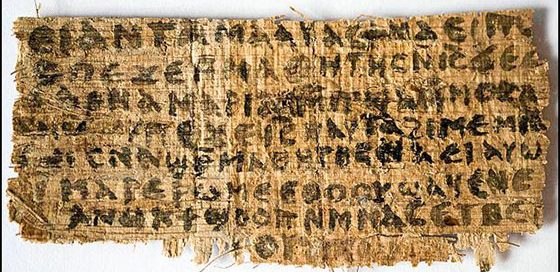
As I think I've indicated on the blog before, on January 23, 2014 there was an interesting discussion, on stage, between Karen L. King (Hollis Professor of Divinity at Harvard Divinity School), Mark Jordan (Distinguished Professor at Washington University, Saint Louis; he is returning to Harvard next year), and me on the topic "Does It Matter if Jesus Was Married?" The discussion was hosted by the Black Mountain Institute at the University of Nevada, Las Vegas, in the Beam Music Center, Doc Rando Hall, UNLV. The Black Mountain Institute is an International Center for Creative Writers and Scholars. The event was moderated by the former President of UNLV, Carol Harter, who did a very fine job indeed keeping us all on target and on topic. The basic underlying question was: what would a married Christ mean for the theology, practices, and politics of Christian traditions as they grapple with changing times?  I did manage to say a few words about the prior question: *Was* Jesus married? The Black Mountain Institute was motivated to invite us [...]

2025-09-10T12:24:30-04:00February 26th, 2014|Historical Jesus, Public Forum, Video Media|

Abraham and Jesus?

QUESTION: THIS QUESTION FROM A MEMBER OF THE BLOG QUOTES SOMETHING I SAID IN MY PREVIOUS POST AND THEN ASKS A QUESTION ABOUT IT: “As I’ve intimated, my own view is that these patriarchal narratives are not historical accounts of people who actually lived and did the things ascribed to them. I see them as highly legendary, narratives told by the people of Israel – after they became the people of Israel (say in the 11th or 10th centuries) — about their “early days.” Stories circulated for years and years in different parts of the land, among different tribes of people who were later said to have all been part of Israel. These stories were then combined and put into the sources, which later were composed into one big narrative (say in the 6th c BCE). I do not see them as historical records, but more as something like “founding legends” that help explain to the people who they are in light of their (imagined) past.” If that’s the case then why can’t the same [...]

Jesus Kissing Mary Magdalene

QUESTION: I know that the “Gospel of Philip does not have much if any real historical veracity to it about Jesus’ life, but does the references about Jesus and Mary Magdalene being lovers and the holes in the papyrus ‘kissing’ verse (verses 32 and 55 in your “Lost Scriptures” book), help support the view that this most likely Gnostic Christian sect truly believed and taught that Jesus and Mary M were married? RESPONSE: Yes, this is one of those questions I get asked about on occasion.   I have a reasonably full discussion of the relevant issues in my book Peter, Paul, and Mary Magdalene.   In the book I put the discussion in the context of – yes, you guessed it --  Dan Brown’s Da Vinci Code, the one source many people turn to for the Gospel of Philip. (!)   Here’s what I say there: ************************************************************** Some of the historical claims about the non-canonical Gospels in the Da Vinci Code have struck scholars as outrageous, or at least outrageously funny.  The book claims, for example, that [...]

Mary Magdalene as a Prostitute?

In my previous post I was answering the following question: “where did the origin of Mary Magdalene as an escort/ sex worker come from?” I began my answer by citing a passage from my book on Peter, Paul, and Mary Magdalene, where I explained that a number of passages in the New Testament in which women are said to appear are often said / assumed to be about Mary Magdalene, even though she is not mentioned in them. That is where I will pick up the conversation here, to show that these stories are almost certainly *not* about her; I will then show how they all got mushed together in the popular imagination, largely because of a famous sermon preached by a famous pope in the sixth century. Here is where I resume: *************************************************************************** None of these New Testament stories, however, deals with Mary Magdalene -- except in popular imagination, which has kept blissfully removed from a careful reading of the texts themselves. But the New Testament texts actually tell a different tale. Mary Magdalene [...]

Mary Magdalene in Various Guises

QUESTION: Forgive me if this has already been asked several times, but where did the origin of Mary Magdalene as an escort/ sex worker come from? RESPONSE: Ah, great question. It’s kind of a complicated story, so I’ve decided simply to reprint what I have to say about it in my discussion of Mary Magdalene in my book Peter, Paul, and Mary Magdalene. In that book I devote six chapters to each of these important Christian figures, in each case explaining what we can know about them historically and then what we can know about the later legends that sprang up about them. In my introductory comments to my discussion of Mary Magdalene, I explain why she is widely thought of as a prostitute (in the popular imagination, not by scholars), even though she is not called that in the New Testament. This discussion is too long for a single post, so I will divide it in two, with the second coming tomorrow or the next day. ***************************************************************************** One feature of our sources makes Mary’s [...]

Jesus and Sexuality

A few more thoughts on why it might matter whether Jesus was married. I must admit, for me one of the most useful outcomes of such a discovery (which, alas, I’m afraid will never be made since I doubt he was married) would be that it would show that Jesus was a sexual being, and not some kind of divine automaton walking the dusty paths of Galilee. As Mark Jordan said during our public discussion in Las Vegas – I’m paraphrasing since I can’t remember how he put it exactly, except that it was much wittier than anything I would be able to come up with: Christians need to decide if Jesus had genitals, and if so, whether he used them. Related to this, in theory at least, discovering that Jesus was married could elevate the status and importance of women within the Christian tradition. They are not outsiders, the way they are often imagined to be when people think that all Jesus cared about were the twelve men disciples. They were central to his [...]

2025-09-10T12:24:13-04:00January 31st, 2014|Historical Jesus, Sex and Sexuality in the Bible|

A Married Jesus and Celibate Priests

So, I’ve written a few posts on the question of whether Jesus was married. Short answer: I don’t think so. I’m surprised at how many people on the blog apparently do think so, and I don’t recall that anyone has actually presented any evidence for it. :-) But, well, maybe he was! (I should stress though, that since history is a matter of probabilities, “maybes” don’t as a rule go very far.) Anyway, some readers do think Jesus was married, and fair enough. But does it actually matter? I have jokingly said on a number of occasions: “Not to *me*!” And that’s absolutely true, as I’ll explain later. Some people think that it certainly would matter. For example, if Jesus was married, wouldn’t that more or less single-handedly destroy the idea that priests have to be single and celibate? That would matter! And wouldn’t it elevate the importance of women (especially one of them) in relationship to Jesus, and wouldn’t that be a good thing for women who are oppressed within the Christian tradition? And [...]

2025-09-10T12:23:57-04:00January 30th, 2014|Historical Jesus, Sex and Sexuality in the Bible|

Jesus and Marriage: An Actual Argument!

So far I have pointed out that it is flat-out wrong to say that every Jewish man in the first century was married and was expected to be married. It is not only demographically impossible (there were not enough women to go around) but we know of Jewish men from the time of Jesus who were not married and were proud of it. Strikingly, they, like him, were apocalyptically minded Jews – such as the Essenes and the apostle Paul. I have also argued that whatever Mary Magdalene was to Jesus, she was not his lover and spouse, to the great disappointment of us all….. But is there an actual argument that Jesus was not married other than the silences? I think there is. And this is what it is. A good deal of Jesus’ teaching, of course, was ethical in nature, about how people ought to live and conduct themselves. Many people think of Jesus as one of the great moral teachers of all time, and I have no quarrel with that. But I [...]

2025-09-10T12:23:57-04:00January 28th, 2014|Historical Jesus, Sex and Sexuality in the Bible|

Jesus and Mary Magdalene

I pointed out in my last post that most people simply assume that Jesus was not married because there is no mention of his wife in any of our sources, or any mention that he ever had a wife. And so it is assumed that he did not have one. As Karen King pointed out in our discussion the other night at the Black Mountain Institute at the University of Nevada Las Vegas, that is an argument from silence, and as such is not a very strong one – since, among other things, none of these sources indicates, either, that he was not married. And so this is not evidence in one direction or another. It’s a good point, but my own view is that the silence in this case is telling – though not for the reason people sometimes say. It is sometimes wrongly asserted – by no less authority than Dan Brown, in the Da Vinci Code – that if there was not claim that Jesus was not married that must mean that [...]

2025-09-10T12:23:57-04:00January 27th, 2014|Historical Jesus, Women in Early Christianity|

Was Jesus Married?

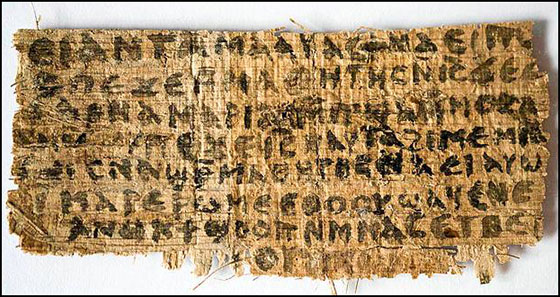
I am en route just now, back from Las Vegas, where I participated in a discussion with two other scholars at the Black Mountain Institute on the question “Would It Matter If Jesus Were Married?” The Black Mountain Institute is part of the University of Nevada at Las Vegas (UNLV); it sponsors events having to do with literature and history. Usually these involve two or more scholars, on stage, on chairs, with a moderator, discussing a topic of mutual interest. The moderator last night was Carol Harter, the former president of UNLV. The two other scholars were Karen King and Mark Jordan. Both Karen and Mark are very well known and highly respected scholars. Karen is a professor of early Christianity at Harvard, where she holds the oldest endowed chair, of any kind, in the country; her expertise is especially in early Christian Gnosticism, and she has become best known in the past few years for her role in publicizing the “Gospel of Jesus’ Wife” that I have blogged on before (search and see!). I’ve [...]

Historical Certainty and Jesus

QUESTION(S): Evidently the “Q” source is quite authentic, but why? And, other sources of Jesus’ sayings may be related to oral traditions and even to early church teachings that were fed back into the Gospels and are less authentic…. I find it hard to accept that what we have in the New Testament is the authentic material was actually said and done by Jesus (in the strict historic sense). You said that the statement about Jesus relating to God’s Kingdom on earth and who was to rule and that Jesus thought he was the King of the Jews and that Judas reported that to the religious authorities. How do we know that this is historically accurate? How can we know that one item is authentic and others aren’t? I did read your book dealing with the criteria, but I am not convinced…. ***Question*** How do we know, absolutely and historically, that even those sayings of Jesus that meet the criteria you use are authentic and not simply the teachings of the early church fed back [...]

2025-09-10T12:23:56-04:00January 24th, 2014|Historical Jesus, Reader’s Questions|

The Jesus Seminar and John the Baptist

QUESTION: Does the Jesus Seminar also reject the claim that the Baptist was an apocalypticist? Bart Ehrman Jesus Seminar and John the Baptist RESPONSE: This is a great question, and I’m afraid I don’t know the definitive answer – in part because the Jesus Seminar did not have one and only one view on many topics. The Seminar was made up of a group of scholars who got together twice a year to discuss which aspects of the traditions found in the Gospels (mainly the canonical Gospels along with the Gospel of Thomas) were more likely to be authentic, and which, as a corollary, were likely to have been later creations of the early church as they told their stories about Jesus. The members of the seminar would then vote on each tradition – after extensive, learned discussion, and publish the results of their votes. I should say that on many of the very broad and most important issues about the historical Jesus I was/am in complete agreement with the seminar. We all agree that: [...]

2025-09-10T12:23:56-04:00January 22nd, 2014|Historical Jesus, Reader’s Questions|

Final Loose Threads on the Zealot Hypothesis

I think I’ve gone on about Aslan’s Zealot long enough. Maybe more than long enough, many of you may think. My plan is to make this the last post. Let me reiterate that I think it is an exceptionally well-written, engaging book, and we can all be thankful to Aslan for bringing important historical issues about Jesus to the public attention. I may think that he’s wrong about his central thesis, and I may recognize a lot of errors in his book (about history, about the NT, about early Christianity). But I appreciate very much that he has gotten people talking about Jesus from a historical perspective – something that I think is of utmost importance, especially in our American context where Jesus typically is only spoken of by believers who do not appreciate the importance of history for knowing, well, about the past! In this final post I want to speak about a couple of threads, loose traditions that are sometimes used to argue that Jesus was most likely a zealot, someone who was [...]

2025-09-10T12:23:55-04:00January 8th, 2014|Book Discussions, Historical Jesus|

Jesus’ Crucifixion as King of the Jews

It is often said that one of the best pieces of evidence that Jesus is to be understood as a political insurgent who favored the overthrow of the Roman empire by means of (human) force is that he was crucified on charges of political insurgency. If he was charged with insurgency, he was probably an insurgent. There is, of course, a powerful logic to this view, but it has its flaws, and an alternative explanation actually works better. In terms of flaws, it needs to be noted and emphasized that in our sources the other two people crucified with Jesus were called lestai (sometimes translate “robbers” – but Josephus uses it to refer to someone engaged in guerrilla warfare against the ruling authorities, an armed insurgent). So too in the Gospel of John, Barabbas – the one the crowds preferred to Jesus – is also called a lestes. But – here’s the *big* point: Jesus is NOT called a lestes in these accounts. Ever. And he is not condemned to death –as are these others [...]

2025-09-10T12:35:22-04:00January 6th, 2014|Book Discussions, Historical Jesus|

Jesus and the Temple

Back to Aslan’s Zealot. I will not be going on forever, but I do want to make a few final posts. So far I have shown that the book is filled with mistakes, some of them important, about the ancient world, about the New Testament, and about early Christianity. These are simply errors, things (I tried to show) that Aslan just got wrong. After that I tried to show why the thesis itself was highly problematic by taking on his lead chapter and showing just why the claims he makes don’t “work” historically. And then, most recently, I’ve shown why scholars have widely opted for a solution that differs from Aslan’s view that Jesus is best seen as one totally zealous for the law and the land of Israel to the extent that he favored a military overthrow of the Roman empire as foreign occupiers. The alternative is that Jesus instead was a preacher of apocalyptic doom. It was not by military force that the enemy would be defeated, but by an act of God, [...]

2025-09-10T12:23:55-04:00January 4th, 2014|Book Discussions, Historical Jesus|

More Evidence that Jesus was an Apocalypticist

I am not going to belabor the point much longer, that Jesus is best understood as a Jewish apocalypticist who anticipated that God was soon to enter into history to destroy the forces of evil and bring in his good kingdom; he was not a lestes, one who supported a military uprising against the Roman forces.  Rather than subscribing to the idea of military violence, Jesus believed that the Son of Man was coming in judgment and that he would destroy all that was aligned against God.   I’ll be giving more evidence for why Jesus was not a lestes later.  For now, it is enough to stress that an alternative understanding accounts much better for the evidence that survives. I have already given fairly compelling reasons for thinking that Jesus was an apocalypticist.  In this post I’ll give another kind of argument, which to me has always seemed like a slam dunk. In a nutshell, the argument is that we know beyond any reasonable doubt what happened at the very beginning of Jesus’ public ministry [...]

2025-09-10T12:23:43-04:00December 31st, 2013|Historical Jesus|

The Later De-apocalypticizing of Jesus

Yesterday I started mounting the case that rather than being a zealot interested in a military overthrow of the Romans to reclaim the land for God, Jesus was an apocalypticist who believed that God himself would intervene in history to destroy the forces of evil (presumably including the Romans; and certainly including the Jews who were not “on the right side”) to set up his kingdom. It is worth re-emphasizing that all over the map in our early sources Jesus speaks about the Kingdom of God. He does not speak about the Kingdom of Israel, or about the use of military force (I’ll get to the scattered exceptions eventually), or about “retaking the land.” This is a key point because Aslan thinks that for Jesus it was all about getting rid of the Romans and taking the land back; but Jesus doesn’t talk about that in our earliest sources – even the ones that Aslan cites (as I showed in earlier posts: unlike zealots, Jesus told his followers that they *should* pay taxes to Rome!). [...]

2025-09-10T12:23:43-04:00December 29th, 2013|Canonical Gospels, Historical Jesus|
Go to Top