
Search
Advanced search
How Views of the Afterlife Changed
I’ve been explaining how the tours to heaven and hell – both of them Near Death Experiences – in the Acts of Thomas are meant to show the Christian alternatives to Greek and Roman views of the afterlife. For early Christians it would not be a dull and boring, powerless and mindless existence for all eternity, as it is depicted in the oldest Greek sources, and it would not require hundreds of years of “purging” where the stains of wickedness are washed out through painful cleansing (e.g., through being thrust into fire or a violent whirlpool for centuries), as in Plato and Virgil. It would be eternal joy or eternal punishment, one or the other, depending on whether you believed in Christ or not. Christians thus provided the ultimate and rather simply answer for life to the ultimate question about death. But even here there was more than a simple binary (one or the other). The punishments in hell in the Acts of Thomas for example, appear to be graded in order to be commensurate […]
August 14, 2019
Join Me In Egypt? Tour in October 2020!
I am (very) happy to announce that I will be giving lectures on a tour to Egypt on October 16-29, 2020. It’s not too early to start planning! On the contrary: the trip hasn’t been seriously advertised yet, and already four people have signed up! The trip is sponsored by the University of North Carolina General Alumni Association, BUT — big point here! — you do not need to be an alumna/alumnus to come. It’s going to be a terrific trip. The final brochure is not ready yet, but you can get the itinerary already from the company putting it on, Orbridge, at: https://orbridge.com/grp_departures/overview/partner_unc_egypt_2020 (Highlights below) It’s spectacular. I’ve done a number of these sites before (Cairo, Pyramids, Luxor, Valley of the Kingd, Karnak Temple, and on and on), BUT, this time we’re doing something I’ve never done before and always wanted to: a four-day cruise down the Nile. How good can it get??? If you want to get more info, call the UNC Alumni office at 877.962.3980, and/or check out their travel website. […]
August 16, 2019
Blog Dinner for NYC Full!
I am pleased to say that the table for the blog dinner in NYC for August 27 is now full. At this point I will start a waiting list, in the event that someone backs out, as often happens. So let me know if you want to be on it. And as other opportunities come up, I’ll be sure to post them.
Learning New Things
I am constantly awed by some fellow scholars,who have not just enormous range of knowledge about so many things but also an inordinate, almost insatiable curiosity. There aren’t many people like that, but I know some. At the same time I am regularly puzzled by people who simply have no curiosity about much of anything, who have strong opinions about lots and actual knowledge about little, who just don’t have any real curiosity or drive to find answers to anything. I’m not talking about the BIG questions of life (Why are we here? What is the purpose of it all? What should I be doing with my life? Etc. etc.) – although I do find it odd that so many people just don’t think about them. But here I’m talking about knowledge in general. People simply prefer to sludge through life without looking into anything beyond the headlines, without reading books, without finding anything worth looking into. I suppose I too was raised that way and was that way for the early part of my […]
August 18, 2019
Resurrection from the Dead: Were Jews Influenced by Zoroastrianism?
I often get asked if ancient Judaism was influenced by Zoroastrianism or other kinds of Persian thought – especially when it comes to the specific doctrine of the “resurrection of the dead” and, more generally, the whole category of “apocalyptic thought.” I used to think so! Now I’m not so sure. At all. I’ve talked about apocalypticism and resurrection on the blog before. Here I’ll discuss where these ideas came from, before, explaining more fully what they ended up looking like. This discussion is taken from an early draft of my forthcoming book Heaven and Hell: A History of the Afterlife. ********************************************************* After the period of the classical prophets, Jewish thinkers came to imagine that in fact there would be life for the individual who had died. For them, there was a possibility of life beyond the grave – real, full, and abundant life. But in the original Jewish conception, unlike widespread Christian views today, the afterlife was not a glorious eternity lived in the soul in heaven or a tormented existence in hell, attained […]
August 19, 2019
An Alternative View of Suffering and the Idea of Resurrection
In yesterday’s post I was explaining why I do not think we need to point to Zoroastrianism as the source or reason for the views of “the resurrection from the dead” emerged within Judaism. This view could have arisen within Judaism itself, because of some internal dynamics. Here in this post I explain how it may have happened. I begin where I ended yesterday: in ancient Israel, as up to today, there have been people who think that the reason they suffer is because they have sinned and God is punishing them for it. Suffering comes from God, to penalize his people for not living as they should. This is sometimes called the “prophetic” or the “classical” view of suffering, because it was the view wide advanced by the Hebrew prophets in the Bible. Most people today, of course, realize it is never that simple. Do we really want to say that birth defects, the death of a child, Alzheimer’s, or any of the other mind-numbing forms of suffering in extremis are punishments from God […]
August 20, 2019
Does Your Soul Go To Heaven?
In my previous post I discussed the beginnings of the Jewish idea of the “resurrection of the dead.” This view is a pretty much commonplace today: in every Christian church that recites a creed today, and in many conservative churches that do not use creeds, it is believed that at the end of time there will be some kind of judgment and people will be raised from the dead. At the same time, I have to be frank and say that it seems to me that most Christians – at least the ones I know (not just scholars, but most Christians) – don’t actually *believe* in a future resurrection. They think they die and go to heaven in their souls. Their souls may have some kind of physical attributes: they have all their sense of hearing, seeing, etc., and they can be recognized as who they were so you’ll be able to see your grandmother there. It’s true, even this has always caused problems for people who hold the idea. Which of my many bodies […]
August 21, 2019
An Opening for the Blog Dinner NYC August 27
We have had a cancellation for the blog dinner scheduled for 7:00 pm in NYC (Midtown), this coming Tuesday (August 27). So we have one more seat at the table. Anyone interested? If so, email me at [email protected] Only requirements for attendance: you be a member of the blog, you get there, you pay for your meal, you be interested in talking to us!
August 22, 2019
Does Isaiah 53 Predict Jesus’ Suffering and Death or Has Isaiah 53 Been Debunked?
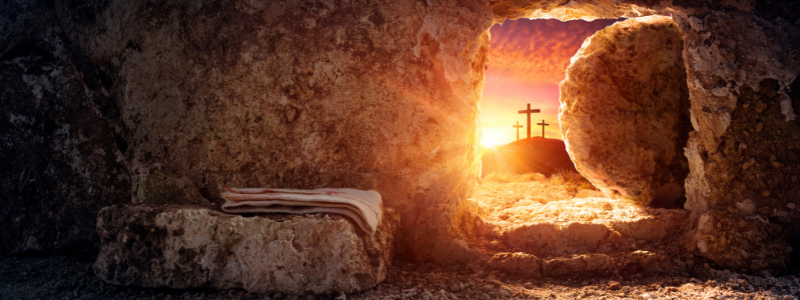
Isaiah 53 is the ONE passage, above all others, that has been used over the centuries by Christians to be a prediction that the messiah will suffer and die for the sake of others. Every semester my students quote the passage to me and say “SEE! Jesus really *is* the messiah predicted by Scripture, centuries before he came!” I have been talking about how the view of a future resurrection of the body came from. This idea, that we would live forever in our bodies (if we were among the “righteous”) was repugnant to just about everyone in the ancient world. But it became a widely held view among Jews, and was taken up with passion by the early Christians. These Christians appealed to the Jewish Bible for support of their view, even though “resurrection” is actually only clearly taught in one passage (Daniel 12:1-3). But they found other passages they claimed were relevant for the idea of resurrection. And most strikingly, they turned to Isaiah 53. Why do I call that striking? Because it […]
August 23, 2019
Writing Scholarly and Popular Books on the Same Topic
As many of you know, I am now working on a scholarly monograph dealing with an aspect of the afterlife, on the heels of having written a “trade” book (that is, for popular audiences) on the topic more broadly. The trade book is coming out in March, and will be called Heaven and Hell: A History of the Afterlife; I am nearly finished researching the scholarly book — it’ll take another month or two — and then hope to have it written by the late spring. It always takes much longer to write the scholarly than the trade books. Lots of foonotes, among other things! I don’t know what the monograph will be called: for now I’m calling it Otherworldly Journeys: Katabasis in the Early Christian Tradition. I doubt if my publisher will let me use “katabasis” in the title, but we’ll see. About five years ago I reflected on what it meant to write both popular and scholarly books on the same topic. I’ve done it three times before in my career, and five years […]
August 25, 2019
My Two Books on Forgery
In a couple of weeks I will be going to Quebec City to deliver a keynote address for a scholarly conference on Pseudepigraphy in Antiquity; most of the presenters will be giving papers in French (hopefully we’ll have written versions for those of us who can’t pick up the nuances well orally), mine will be in English. I’ll be saying more about it anon on the blog — the work on the paper is getting me back into the question of ancient forgery, the practice of writing a book falsely claiming to be some other [famous] person, and whether it was generally seen as a deceitful practice. I’m firmly convinced it was — other scholars in the field refuse to think so — and whether “forgery” is the right term for it or is too loaded. In any event, I haven’t worked rigorously in this field for ten years, and so am catching up in my reading. As it turns out, today on the blog I was going to post on the *second* time in […]
August 26, 2019
On Producing a New Translation of Ancient Texts
I’m in the middle of discussing what it’s like to publish a trade book for general audiences and an academic book for scholars on the same topic. The third time I did this involved a completely different situation from the other two I have described. One thing that was similar was that in this instance, yet again,I had no idea, initially, of producing a popular version, but planned simply to publish a work of scholarship. Only later did I realize that a trade trade version could be very useful. This scholarly book – trade book combination involved an edition of the apocryphal Gospels, the ancient accounts of Jesus words and deeds that did not make it into the New Testament. To explain how the books came to be imagined I need to provide a bit of background. Actually, a lot of background. This will take a couple of posts. It all started with a completely different project altogether, unrelated to the apocrypha. In the mid 1990s I was teaching a PhD seminar on the group […]
August 27, 2019
Did Superior Health Care Lead to the Dominance of Christianity?
Interesting question from a recent member of the blog: QUESTION: In the August 5/12 New Yorker, a review of a new book, “The mosquito: A Human History of our Deadliest Predator.” In this review, this sentence: “In the third century, malaria epidemics helped drive people to a small, much persecuted faith that emphasized healing and care of the sick, propelling Christianity into a world-altering religion.” I realize that medical history is not your thing. If nonetheless you’d care to comment, any warrant for this assertion? RESPONSE: I don’t know that I’ve ever written about mosquitoes before, either on the blog or anywhere else, but I have dealt with issues connected with ancient health care, and in particular with the theory that superior health care was one of the factors that led Christianity to expand to become a dominant (*the* dominant religion) of the Roman world. It is an intriguing idea indeed, and was a popular theory for a very brief moment, about when this book reviewed in the New Yorker came out. […]
- History of Christianity (100-300CE)
- Reader’s Questions
- Reflections and Ruminations
- Spread of Christianity
August 28, 2019
Why It Is Hard To Publish a Translation of an Ancient Text
In my last post, en route to discussing my latest attempt at publishing both a scholarly and a trade book on the same topic, I talked about how I took on the task of doing a new Greek-English edition of the Apostolic Fathers for the Loeb Classical Library. At the end of the post I indicated that doing that edition was one of the hardest things I have ever done. There were lots of things that made it very difficult – deciding which form of the Greek text to use for each of the writings included (i.e. what to do in the many places where the manuscripts differed from one another), doing all the research in order to write up competent and relatively complete Introductions to each text, studying the history of research into various problems posed by the Apostolic Fathers, from the 17th century until today, and so on. But the hardest part was the translation itself. The Greek of the Apostolic Fathers is not incredibly difficult, as far as Greek goes. It is […]
September 29, 2019
Can We Reconstruct the Entire New Testament from Quotations of the Church Fathers?
I am making this post free to everyone, so that, if you’re not a member of the blog, you can see what you’re missing. Every week I make five posts on everything connected to the New Testament and Christianity of the first four centuries. Members can read it all, for a small fee. Every penny of the fee goes to support worthy charities. So why not join? QUESTION: Recently you mentioned that your early work involved analysing patristic citations of the New Testament. I believe it has been said that virtually all of the NT could be recreated from such mentions if the need ever arose. Do you believe that this would, indeed, be possible, please? RESPONSE: This is a very interesting question. I may need to unpack what it means before giving an answer. As most of you know, we do not have the original text of any of the books of the New Testament, only copies made many years (centuries) later. We have over 5600 copies in the Greek language in which […]
September 1, 2019
Why It’s Hard to Publish a Translation: Blast from the Past
In my last post in this thread, en route to discussing my latest attempt at publishing both a scholarly and a trade book on the same topic, I talked about how I took on the task of doing a new Greek-English edition of the Apostolic Fathers for the Loeb Classical Library. At the end of the post I indicated that doing that edition was one of the hardest things I have ever done. There were lots of things that made it very difficult – deciding which form of the Greek text to use for each of the writings included (i.e. what to do in the many places where the manuscripts differed from one another), doing all the research in order to write up competent and relatively complete Introductions to each text, studying the history of research into various problems posed by the Apostolic Fathers, from the 17th century until today, and so on. But the hardest part was the translation itself. The Greek of the Apostolic Fathers is not incredibly difficult, as far as Greek […]
September 2, 2019
The Scholarly Edition of the Apocryphal Gospels
In my last couple of posts I began to describe how my edition of the Apocryphal Gospels came about. After having done the Apostolic Fathers in two volumes for the Loeb, I had decided never to do another translation project again. Too hard! But then, forgetting my decision, I thought it would be useful to have a Greek/Latin – English version of the early Christian non-canonical Gospels. And at the urging of the editor at Harvard, submitted a proposal also for the Loeb Classical Library. But the editorial board decided that they did not want to start publishing new editions of Christian texts in the series, since that would detract from its typical focus on Greek and Roman classics. And so I was now interested in a project without an publisher. I should say – this may not be widely known – that most of the time a scholar writes a book, s/he does not know who will be publishing it, or even if *anyone* will be. This can be a source of real anxiety, […]
September 3, 2019
A Readable Edition of the “Lost” (i.e. non-canonical) Gospels
As I have pointed out before on the blog, the topic of the last post, the edition of the non-canonical Gospels (The Apocryphal Gospels: Texts and Translations), which I published with my colleague Zlatko Plese, was meant for academics – professors of New Testament and early Christianity and their graduate students. Most other people, of course, have no need or desire to see the original Greek, Latin, or Coptic of a text along with a translation. People generally just want an English translation. But having a facing-page translation is a great thing for scholars and budding scholars. The only way really to understand a foreign language text in its many nuances is to read it in its own language. And since these are texts that deserve to be studied carefully, minutely, with full attention to all the fullness of their meaning, they really need to be read in the Greek, Latin, and Coptic languages in which that they have come down to us. For some scholars, the book would be useful because it provides the […]
September 4, 2019
How Did We Get Chapters and Verses?
Here’s a question I get on occasion, about where the Bible’s chapters and verses came from (did the original authors write that way???). I’ve drawn my answer from my textbook on the NT, and since the answer is so brief, I’ll attach another couple of paragraphs drawn from a nearby page in the book, dealing with another somewhat related and even more important (for many people) problem: when did scholars start to think that the differences in our manuscripts were a VERY big deal? QUESTION: About the numbers of the verses, who put them? Who divided the text in verses and chapters, and when? RESPONSE: Here is my answer taken from The New Testament: A Historical Introduction to the Early Christian Writings: Given the fact that ancient manuscripts did not use punctuation, paragraph divisions, or even spaces to separate words, it will come as no surprise to learn that the chapter and verse divisions found in modern translations of the New Testament are not original (as if Paul, when writing Romans, […]
September 6, 2019
Why Don’t More Scholars Write Trade Books?
This post is free for all readers. It can give you an idea of *one* kind of post you find on the blog, five days a week. Usually the posts are actually discussing what scholars say about the New Testament or the early years of Christianity; some are more like this. If you joined the blog you, could get all of them, each and every week, going back seven years. And comment on them. And hear me respond to your comments. So why not join? In my most recent thread I’ve been talking about trade books (written for popular audiences, rather than for scholars) and have received this interesting question, that I don’t recall actually addressing head on before. QUESTION: Why don’t more scholars try their hand at trade books? I agree with another blogger who said that the general public crave knowledge about technical and complicated subjects (history, science, philosophy, religion, etc.). Is it considered crossing over to the dark side?? RESPONSE: This is a great question, and one I think about […]
September 8, 2019