
Search
Advanced search
Was Augustine Telling the Truth About Miracles He’d Seen?
Miracles seem to be everywhere in the early Christian literature, and it is striking how insistent all these ancient sources are it was precisely the wonder-working abilities of the Christians in the name of Christ and the Christian God that convinced potential converts to leave the religious traditions that nearly everyone around them had and had had for time immemorial to join this bizarre new faith in only one God who would provide salvation only to those who believed in the death and resurrection of Jesus. But that’s the consistent testimony, and to cap it off I turn to Augustine, the greatest theologian in the history of Christianity, famous still today, incredibly learned, devout, and sincere, and not one who was prone to deception. Augustine in fact wrote two treatises about lying, arguing that in NO circumstances, WHATSOEVER, was it EVER right to lie. Not EVER. He too reports that Christians did miracles and more than that, he claims explicitly that he had seen a whole lot of them. He gives some details. Here’s what […]
May 27, 2026
Predestination! What do you think?
What do you think of the idea of predestination? That only those who have been predestined by God (from eternity past) can be saved: but not anyone else. The doctrine can be found or at least intimated (possibly: depending on how you interpret them) in a few – though not many – passages of the Bible. The following are three that seem the clearest (key words highlighted; these translations are from the NRSV ue): Romans 8 28 We know that all things work together for good for those who love God, who are called according to his purpose. 29 For those whom he foreknew he also predestined to be conformed to the image of his Son, in order that he might be the firstborn within a large family.[s] 30 And those whom he predestined he also called, and those whom he called he also justified, and those whom he justified he also glorified. Ephesians 1 3 Blessed be the God and Father of our Lord Jesus Christ, who has blessed us in Christ with every spiritual blessing in the heavenly […]
June 2, 2026
Did the Doctrine of Predestination Lead to Capitalism?
In my previous post I gave a brief overview of the doctrine of predestination, especially as developed by the great 16th century Protestant Reformer John Calvin and his followers. I ended the post by indicating – surely this is a surprise for many people – that one of the most interesting and formative understandings of modern capitalism is that its has it can be traced back in its origins to Protestant views of predestination. How does that work exactly? The key text is Max Weber, The Protestant Ethic and the Spirit of Capitalism, tr. Talcott Parsons (NY: Scribner, 1958; German original, 1920). Weber (= VEY-ber) was an important German intellectual often credited as being the founder of modern Sociology as an academic discipline. He begins his book with an intriguing question about modern economic systems that, till then, had never posed: why [in his time, the early 20th century] are there more capitalist ventures, capitalists, and trained capitalist laborers in Protestant countries than in Catholic ones? And in countries of mixed populations, why are there […]
June 3, 2026
The Fear of Hell as an Incentive to Convert
Miracles converted millions of people to the Christian faith in the ancient world. What about the fear of hell? Here’s how I talk about it in my book Triumph of Christianity (Simon & Schuster) ****************************** One of the reasons stories of miracles proved so effective in making converts is that Christians combined them with the claim that God’s manifestation of power in the present foreshadowed what he would do in the future. The present life may have been filled with pain and suffering: people were starving; they were afflicted with blindness, loss of hearing, paralysis, the ravages of disease, or abject poverty; they were attacked by hordes of evil demons. Life could be, and for many it was, a wretched existence, a cesspool of misery. But God’s miracle workers
May 28, 2026
Did the Glories of Martyrdom Lead to Christian Conversions?
Some think that, in contrast to miracles & martyrdom, the fear of perpetual torment in hell may be what drove the early growth of Christianity. After all, who WOULDN’T want to avoid eternal fiery torture? Here’s what I said about that in my book Triumph of Christianity (Simon & Schuster) ****************************** I’ve indicated that fire and brimstone preaching won many converts in early Christianity. What about the idea that the stalwart faith of Christian martyrs, the willingness to “die for the truth” had a big effect on ancient people as well? As it turns out, those two were closely related. The horrors of hell may have been the argument for why people should convert, but
May 30, 2026
Doesn’t Goodness Point to the Existence of God? And Gospel Perplexities. Good Readers’ Questions
Here are some of the excellent questions I’ve been receiving recently, and attempts to respond to them! QUESTION: I understand why the problem of evil makes belief in God difficult. When you look honestly at suffering, it weighs heavily. I don’t think that should be dismissed. But I wonder… if the existence of evil counts as evidence against God, are we accounting for the existence of beauty/goodness? Why does self-giving love move us so deeply? Why does forgiveness feel noble? Why does injustice disturb us so profoundly? And what about beauty… music that stirs something almost sacred in us, acts of courage that restore our faith in humanity, moments of kindness that feel bigger than mere biology? If suffering makes us question whether a good God exists, could goodness point in the opposite direction? I’m not saying this solves the problem of evil. It doesn’t. But I do wonder whether we weigh only the darkness and forget the light. Maybe there’s something else to consider too: when we respond to evil by creating […]
May 31, 2026
Questions on Proving the Resurrection and Sundry Other Things
Readers have given me some tough nuts to crack: Problems with proving the resurrection and with knowing if books of the New Testament may have been scissored and pasted together. Here are intriguing and important questions I’ve received, with my attempts to answer them. QUESTION: When I first began to read Bart’s Blog, he was just pointing out textual errors. Now it seems he is trying to destroy Christianity. Christianity lives or dies by the resurrection. That is our hope. Without the resurrection of Jesus Christ we have no hope. In those days, history and events were passed down verbally and by the written word. What was the incentive to pass down a bunch of hoaxes? I can’t think of any, maybe some of the readers can.
June 6, 2026
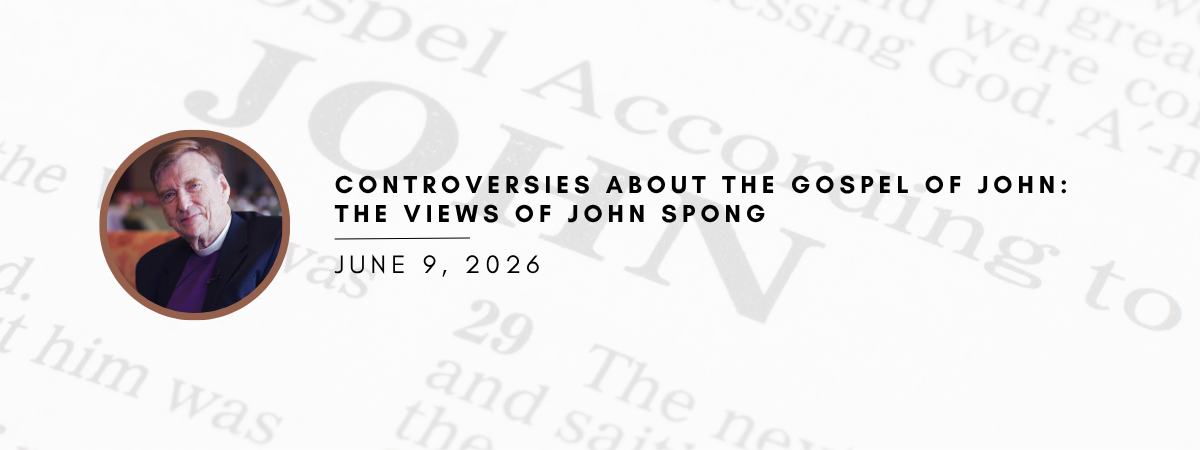
Controversies About the Gospel of John: The Views of John Spong
Just how reliable is the Gospel of John? Is there *anything* in it that is historical? A radical view of John was presented by John Shelby Spong in one of his last books (he published some nineteen or so over the course of his long career.) In my previous post I gave a brief biographical notice about John Shelby Spong, in commemoration of his death in 2021 — in case you don’t know who he was. There aren’t too many Christian scholars who are more skeptical of its historical value than I am: but he is one! Here is how I discussed and engaged with the book when it came out. This will take two posts. ****************************** John Shelby Spong, former Episcopal bishop of New Jersey and highly controversial author (because of his skeptical views about the New Testament and traditional Christian doctrine) has just published a new book on the Gospel of John, called The Fourth Gospel: Tales of a Jewish Mystic. He also wrote an interesting article on it that appeared in the […]
June 9, 2026
Radical Skeptic (about the Bible) and Episcopal Bishop: John Spong
I’m with a group of travelers just now who are interested in critical approaches to the Bible (not views that are criticizing per se, but views that approach the Bible using historical methods — “Biblical Criticism”). One of them – as usually happens – has asked me about the very popular writings of John Shelby Spong, who was an unusual figure in numerous ways, most famously because he was both highly skeptical about the reliability of the New Testament AND a long-time bishop in the Episcopal church. How does that work? Well, work it did. He had a deservedly huge following. Years ago I posted comments on a book he wrote near the end of his career on the Gospel of John, which takes an even more skeptical view of its reliability than I do. But I realized I should first set the context for those of you who don’t know who he was by re-posting my “Memorium” for him written soon after he died. So here is that first, then my summary/discussion of his […]
June 7, 2026
More Criticisms of the Criticisms of the Gospel of John (by John! Spong)
Yesterday I wrote a post in which I began to discuss the recent Huffington Post article from 2103 by John Shelby Spong in which he discusses his then new book on John; the book is called The Fourth Gospel: Tales of a Jewish Mystic. Today I will finish out what I started to say yesterday. Let me say again that I long appreciated Spong’s work and was sympathetic to his mission. He was trying to do from inside the church something very similar to what I’ve long tried to do outside of it: help educated lay people outside the field of biblical scholarship see what scholars – believers and non-believers alike – are saying about the New Testament. Since Spong was operating within the church, however, and saw himself as a Christian,
June 10, 2026
How To Figure Out If a Miracle Happened… Questions from Readers
More interesting questions for readers — including issues connected with miracles… QUESTION: I have a question about the epistemological limits of historical inquiry—one that I have long wondered about without finding a clear answer. My understanding is that historians work with surviving evidence and attempt to reconstruct what most probably happened. Because historical method generally operates with methodological naturalism, events such as miracles—for example, the resurrection—appear either extremely improbable or methodologically excluded within historical analysis, at least methodologically speaking. If this is the case,
June 11, 2026
Why Not Believe in a God Who is *Not* Active in the World?
Isn’t atheism an extreme position to take? If you (or, well, I) give up believe in the Christian God we were (I was) raised on, why give up on the idea of any god entirely? I’m on a trip giving lectures to a group of folks who, well, want to see Norway (!) but also want to discuss issues closely related to what we do on the Blog – questions about the New Testament, the historical Jesus, early Christianity, related topics in religion, and questions about religion in general. It’s a great group with people of a wide range of backgrounds and lots of interesting stories. Already we have discussed lots of interesting things, and one of my fellow travelers has pushed me on
June 13, 2026
The Capitalist Parables of Jesus
Capitalist Parables of Jesus There is a lot of truth in Albert Schweitzer’s observation in his book The Quest of the Historical Jesus (German original 1906), that scholars of every generation since the Enlightenment have portrayed Jesus “in their own image.” Thus Enlightenment-era “rationalists” who realized we do not need supernatural interventions to explain what happens in our world — from lightening strikes and earthquakes to the healing of physical ailments or mental illnesses — explained the amazing records of Jesus’ “miracles” as misunderstood natural events. And hopeful, positive, progressive liberals who thought Jesus,
June 14, 2026
The Parable of the Sower as Advice for Capitalists
Is Jesus’ parable of the sower (Mark 4:1-9) best understood as providing (pre-)capitalist advice about how to think about monetary investments? Is it a divine guide for growing your portfolio? Is it instructing us to consider the market and plant our wealth where it is most likely to grow – thirty-fold, sixty-fold, one hundred-fold? There are certainly people today who have read it that way. If you’re a hard-core capitalist who sees everything in economic terms then it would make sense that this is how you think about the parable. (Understanding Jesus as the “greatest businessman who ever lived” has been around for a century now; see Bruce Barton, The Man Nobody Knows, 1925 – one of the best selling non-fiction books of the 20th century!). But what if you want to understand the parable in Jesus’ own context? In that case, yeah, not so much. This is not a guide to how to run your business or choose your investments. When you look at the details, it is actually quite the opposite. The parable, […]

June 16, 2026
Did Paul Have an Exalted View of Himself?
Yesterday one of my fellow-travelers on a trip I’m taking wanted to talk about Paul and his self-image, and whether Paul had a rather (or extremely) exalted view of his own importance. I gave him one of my standard answers, that I think it’s impossible to engage in a psychological analysis of a person’s self-image when they lived millennia ago (it’s certainly hard enough when they share our time and culture and we’ve known them for years). But it is possible to know, sometimes, what a person actually thought about themselves on some level. And however we evaluate the psychological elements involved, I do think it’s safe to say that Paul saw himself as an important and inspired person in the history of the salvation of the world. Make of it what you will! Here’s how I have explained it before, based on my book Peter, Paul, and Mary Magdalene (Oxford University Press), edited here for the occasion. ****************************** To make sense of how Paul’s conversion affected his actual life, not just his theology, […]
June 18, 2026
The Most Likely Capitalist Parable of Jesus?
Of all the teachings of Jesus in the New Testament, the Parable of the Talents (Matthew 25:14-30; the same parable, with important differences, is the Parable of the Pounds in Luke 19:11-27), in my view, is the one most amenable to a capitalist interpretation – easily and often seen as an exhortation to invest one’s money to make money, at the highest possible rate. Even so, this, in my calculation (!), would be a serious misreading of the parable. It is indeed a parable that discusses money and investment at interest. But it is not about that at all. I’ll explain. But first, by way of summary (recall: a talent not a personal ability but a large unit of money): A man goes on a long journey and entrusts money to three of his slaves: five talents to one, two to another, one to the third. The first two invest the money at interest and double what they received. When the man returns, he showers them with praise for their stewardship. The third slave, however, […]
June 17, 2026
Memory of My Past: My First Girlfriend and Jesus
Some of you have probably had this same experience. Now that I’m 70, I’m thinking about my past a lot more than … in the past. The other day I was thinking about my life in high school soon after I had become a born-again Christian (an incredibly ignorant born-again Christian). One incident quickly came to mind.
June 20, 2026
The Realities of Publishing a Scholarly Book
One of the emails I get *all* the time is from authors who have written a book, or hope to write a book, who want to know how they can get a publisher to take a look at it. The short answer: it ain’t easy. Often the inquiry comes from someone who wants to publish a book for scholars to convince them to take a different view on a matter of scholarly importance. How does a someone get a publisher to publish a book like that? People don’t like to hear this, but if you don’t already have scholarly credentials an academic publisher will almost certainly (or at least extremely rarely) even consider your manuscript. And having the credentials, for a first-time author, almost always means having done advanced graduate level education in the field. I know a lot of authors who think that it’s not fair that they can’t get their books published “just because I don’t have a PhD.” It get that — it must be hugely frustrating. But the problem is that […]
June 21, 2026
Announcing the Ehrman Blog Newsletter – Please Check Your Email!
Today, I’m excited to announce the launch of the Ehrman Blog Newsletter – and want to be sure that you’re getting it! The first email went out on Saturday, so if you didn’t receive it, please read the following: What is the Ehrman Blog Newsletter? A regular, new email I’ll be sending – at least weekly – which will include: A recap of the week’s new articles on the Blog Announcements Notice about all my public lectures, debates, and interviews and more! Who is it for? The newsletter is for anyone interested in keeping up to date with me and the Blog, whether you’re a member or non-member. Note to Blog Members: You should already be on my email list and should have received an email from me on Saturday. If you’re a Blog Member and didn’t receive it, I’ll tell you what to do below. Note to Non-Members: If you’re not a member but are interested in keeping up to date with all the important goings on at the Ehrman Blog, please click here […]

March 17, 2021
Announcement: Did Jesus Call Himself God? LIVE Webinar on Nov. 7th, 2021 (VIDEO)
Soon after Jesus’ death, his disciples claimed that he was God. What did they mean by that? Did they think he was God *before* he died, during his public ministry? Did they think he had always been God? Did they think he Was he the One and Only God, Yahweh? More important still: Did Jesus himself think he was God? To find an answer, we have to explore two issues: does Jesus actually ever call himself God in the Gospels, or give any other indication that he thought he was God? If so, given the problems with the Gospels — can we know if they are accurate on this point? Can we show what the historical figure of Jesus actually said about himself? These are terrifically important questions. Traditional Christianity, as it has come down over all the centuries, has always claimed Jesus himself is a divine being. Did that teaching start with Jesus himself? Announcing a Webinar on the Topic! I will be doing a webinar on the topic on Sunday, November 7. I […]
October 28, 2021