Sorting by

×

Back to the Question: The Orthodox Corruption of Scripture

This is by far the most unusual thread I have had in the three and a half years of doing the blog.   It started with a question that I began to address on June 30.  It is now September 11.   I have had a few brief interludes dealing with other things, but almost all the posts in the intervening weeks (months!) have been background that I needed to lay out to answer the question.  And in fact the background has been only to answer one part of the question.   Here was the original question:   READER’S QUESTION: Dr. Ehrman, I do not know if others would find this interesting, but I would love to know how you developed the idea for The Orthodox Corruption of Scripture. How did you go about researching it? How long did it take? Is it a once in a lifetime work?   RESPONSE: OK, so to understand my response it is important to bear in mind what I have been discussing all this time.  Here I will summarize.  Roughly speaking [...]

How Jesus Became God on Humanist Hour

OK, here is something different to break up all the discussion of textual criticism. On May 14th, 2014, I was interviewed by Bo Bennett on the hour long program called The Humanist Hour.  This is a one-hour talk show produced by the American Humanist Association (see : http://americanhumanist.org/ ).  In the interview we discuss my personal background as a believer, some fundamentals of the Bible from a historical perspective, and some comments related to my book, How Jesus Became God: The Exaltation of a Jewish Preacher from Galilee. + + + + + + + + + + + + + Please adjust gear icon for 720p High-Definition:

2025-09-10T12:25:14-04:00September 6th, 2015|Book Discussions, Public Forum, Video Media|

Ruffling the Feathers of My Fellow Textual Critics

I seem to get under the skin of a lot of my fellow textual critics.  Or at least a lot of them find my views somewhere between troubling and irritating.   That became most clear when I published my book Misquoting Jesus.   From what I can gather, the most common complaints about the book were about its perceived “tone.”  Some scholars thought that I made the situation of our manuscripts to be worse than it really is.  I, on the other hand, am not so sure about that. What has probably struck me the most in the years since the book was published (it’s been ten years now!  Very hard to believe….) is that critics almost never say that anything I claimed in the book is actually wrong.  In fact, so far as I know, everything I said in the book is completely right.  How many books are attacked for not saying anything wrong? Here are the main points that I stress in the book. We do not have the originals for any of the books [...]

2025-09-10T12:30:37-04:00August 28th, 2015|Book Discussions, New Testament Manuscripts|

Intentional Changes of the Text

I’m getting back now, with this post, to the thread that I started a full month ago in response to a question a member of the blog had related to the field about one of my books that deals with the textual criticism of the New Testament.   Just to bring us all back up to speed, I will here repeat the question and briefly summarize what I have covered so far.   READER’S QUESTION: Dr. Ehrman, I do not know if others would find this interesting, but I would love to know how you developed the idea for The Orthodox Corruption of Scripture. How did you go about researching it? How long did it take? Is it a once in a lifetime work?   RESPONSE: To start with, I have devoted a number of posts to unpacking what the title of my actually means.   First, in several posts, I’ve explained what the term “orthodoxy” means to scholars of early Christianity, and what it doesn’t mean.  To sum up as succinctly as I can (for fuller [...]

Google Cambridge Lecture on Forged

On April 7, 2011, I visited the Google Cambridge l in Cambridge, MA to discuss my book Forged. In my talk I explain how ancient writers sometimes falsely claimed to be a famous person in order to encourage people to read their books.   This practice of "literary forgery" was relatively common in the ancient world, but it was also widely condemned.  In my book I focus on instances of this practice in early Christianity -- some of them appearing within the New Testament. Please adjust gear icon for high-definition.

The Manuscripts of the New Testament

Before I start explaining what The Orthodox Corruption of Scripture was about, why I wrote it, what motivated me, and what I wanted to accomplish I (quite obviously, you may be noticing) have to provide a lot of background information. We’ve now moved on from talking about early Christian diversity (orthodoxy and heresy) and are now into discussing “textual criticism,” the academic discipline that tries to establish what an author actually wrote if you don’t have his original but only copies made from later times. To set the stage for what I really want to talk about, first I have to summarize some of the most important information about the textual “witnesses” to the text of the New Testament. I won’t be going into this information at any serious length. We could have many, many, many posts on virtually every single detail that I mention. But trust me, you don’t want that. There are three kinds of witnesses to the text of the New Testament, that is to say, three kinds of documents that can [...]

2025-09-10T12:30:02-04:00July 16th, 2015|Book Discussions, New Testament Manuscripts|

What Is Textual Criticism?

In discussing the background to my book The Orthodox Corruption of Scripture I have so far been talking about the issue of early Christian diversity, so as to explain what the term “orthodox” in the title means.  I now want to turn more fully to a discussion of the term “corruption,” and to do that I need to provide some basics about the general field of inquiry that the book is devoted to, the textual criticism of the New Testament. The first thing to emphasize is that the term “textual criticism” is a technical term with a very specific meaning.  Lay people often misuse the term, not knowing that it refers to a particular and highly specialized field of study.   The term does *not* simply mean “the study of texts” or “literary analysis of texts” or anything similar.   Thus, if someone is engaged, for example, in the interpretation of a text, that is *not* “textual criticism.” Instead, textual criticism is the discipline that seeks to reconstruct the text that an author wrote when we no [...]

2025-09-10T12:30:02-04:00July 15th, 2015|Book Discussions, New Testament Manuscripts|

Orthodoxy and Proto-Orthodoxy

Orthodoxy and Proto-Orthodoxy - the current thread on the diversity of early Christianity actually began as a response to a question raised by a reader, which was the following: Dr. Ehrman, I do not know if others would find this interesting, but I would love to know how you developed the idea for The Orthodox Corruption of Scripture. How did you go about researching it? How long did it take? Is it a once-in-a-lifetime work? My initial thought was that I would be able to answer the question in roughly five or six posts.   But here it is, two weeks later, and I haven’t even started to answer it because it has taken this long to describe what I mean by the term “orthodox.”   And I haven’t finished doing even that!  But I hope to do so with this post. Orthodoxy and Proto Orthodoxy - Right Belief vs False Belief To this point I have tried to explain why so many scholars for the past 80 years or so have been convinced that we cannot [...]

Earliest Christian Diversity

In keeping with the current topic of the diversity of early Christianity, I thought I could say something about a book that I just read that I found to be unusually interesting and enlightening.   It is by two Italian scholars, married to each other, who teach at the Università di Bologna, Adriana Destro, an anthropologist, and Mauro Pesce, a New Testament specialist whose teaching position is in the History of Christianity. Their book is called Il racconto e la scrittura: Introduzione alla lettura dei vangeli.  It is about all the things I am currently interested in:  the life of Jesus as recounted by his earliest followers, the oral traditions of Jesus, and the Gospels as founded on these oral traditions.  In it they develop a theory that I had never thought of before.   I’m not sure all the evidence is completely compelling, but the overall view is very interesting and very much worth thinking about.   As an anthropologist Prof Destro looks at things in ways differently from most of us who are text-people; and she [...]

NC Bookwatch: Lost Christianities

While I'm on the issue of early Christian diversity, I thought it might be useful to post a video that I did over ten years ago now on my first book written to address that theme, Lost Christianities: The Battles for Scripture and the Faiths We Never Knew" .  On August 29, 2004, I was invited to appear on North Carolina Bookwatch, hosted by D.G. Martin. [Episode: 239]. In the discussion I talked about early (alternative) forms of Christianity and about how they came to be suppressed, reformed, or forgotten. All of these groups insisted, of course, that they upheld the teachings of Jesus and his apostles, and they all possessed writings that bore out their claims, books reputedly produced by Jesus's own followers. D. G. Martin is the host of UNC-TV’s “North Carolina Bookwatch.” He is a really good guy, interesting and interested.  He is a retired lawyer, politician, and university administrator. Please adjust gear icon for high-definition.

2025-09-10T12:29:30-04:00July 9th, 2015|Book Discussions, Public Forum, Video Media|

Evaluating the Views of Walter Bauer

In my last two posts I talked about the relationship of orthodoxy and heresy in early Christianity.   The standard view, held for many many centuries, goes back to the Church History  of the fourth-century church father Eusebius, who argued that orthodoxy represented the original views of Jesus and his disciples, and heresies were corruptions of that truth by willful, mean-spirited, wicked, and demon inspired teachers who wanted to lead others astray. In 1934 Walter Bauer challenged that view in his book Orthodoxy and Heresy in Earliest Christianity.   Bauer argued that in many regions of the church, the earliest known form of Christianity was one that later came to be declared a heresy.   Heresies were not, therefore, necessarily later corruptions of an original truth.  In many instances they were the oldest known kind of Christianity, in one place or another.   The form of Christianity that became dominant by the end of the third century or so was the only known particularly in Rome.   Once this Roman form of Christianity had more or less swept aside its [...]

A Radically Different View of Orthodoxy and Heresy

In my last post I started discussing the terms “orthodoxy” and “heresy,” pointing out that their traditional/etymological meanings are not very helpful for historians.   “Orthodoxy” literally means the “right belief” about God, Christ, the world and so.   That means it is a theological term about religious truth.   But historians are not theologians who can tell you what is theologically true; they are scholars who try to establish what happened in the past.  And so how can a historian, acting as a historian, say that one group of believers is right and that another is wrong? The problem with the two terms came to particular expression in a book written in 1934 by a German scholar named Walter Bauer.  The book was auf Deutsch, but its English title is Orthodoxy and Heresy in Earliest Christianity.   For my money, this was the most important book on early Christianity written in the 20th century.   It completely revolutionized how we are to understand the theological controversies that were wracking the Christian church in its early years. If you recall, [...]

What Are Orthodoxy and Heresy?

In my previous post I began to explain what I meant by the title of my 1993 book, The Orthodox Corruption of Scripture.   One of the terms of the title is non-problematic:  by “Scripture” I meant specifically the writings of the New Testament.  Another term, “corruption,” is a bit trickier, and as  I indicated I was using it both in a technical sense to refer to any kind of alteration of a text by a scribe who was copying it (that is what textual critics have traditionally called any change of the text, since for them the most important thing was the “original” text as written by the author) and in an ironic sense because I wanted to talk about changes of the text away from, rather than toward, a possible heretical meaning. And that takes me to the other two terms of importance, “orthodoxy” and “heresy.” These are two much debated terms, and part of the issue has to do with their literal or etymological meaning.   In terms of etymology, the word “orthodoxy” comes [...]

What is An Orthodox Corruption of Scripture?

READER’S QUESTION: Dr. Ehrman, I do not know if others would find this interesting, but I would love to know how you developed the idea for _The Orthodox Corruption of Scripture_. How did you go about researching it? How long did it take? Is it a once in a lifetime work?   MY RESPONSE: Ah, this is a great question and it will take a number of posts to lay it all out, as it is a very complicated affair.   But it could make for an interesting thread.  We’ll see! To begin with, I need to say something about what the book was about.   I will have a lot more to say about that in subsequent posts.  At this point I’ll simply try to give the whole thing in a nutshell. First let me clarify the key terms of the title, which in full was :  The Orthodox Corruption of Scripture:  The Effect of Early Christological Controversies on the Text of the New Testament.   By “Scripture” I was referring only to the specifically Christian Scriptures, [...]

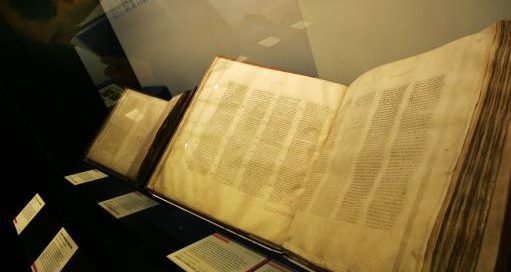
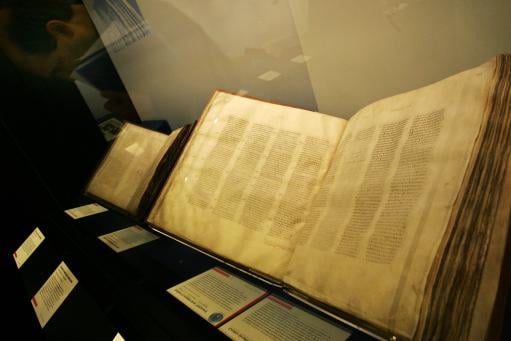
Tischendorf and the Discovery of Codex Sinaiticus

PLEASE NOTE: I am incommunicado for a few days on a gulet in the Aegean Sea on the west coast of Turkey. I have asked Steven, our blog support, to add some posts for me in my absence; I prepared these in advance knowing I would be out of reach. Here is one of them. I’m afraid I will not be able to respond to comments on the next few posts until I return to some form of civilization that supports Internet and all things electronic. So sorry! **************************************************** In my previous post on the discovery of biblical manuscripts, I mentioned the most intrepid of manuscript-hunters of modern times, Tischendorf. His story is very interesting. Here is what I say about him and his most famous discovery in my book Misquoting Jesus. The one nineteenth-century scholar who was most assiduous in discovering biblical manuscripts and publishing their texts had the interesting name Lobegott Friedrich Constantin von Tischendorf (1815-74). He was called “Lobegott” (German for “Praise God”) because before he was born, his mother had seen [...]

Authors Who “Just Want to Sell Books”

Sometimes I hear someone criticize me, or another author, by saying “he just wants to sell books.”     That has always struck me as a very strange thing to say.   Of course I want to sell books.  Why else would I write books?   Would I want to write books so no one would read them?  Has there ever been an author on the face of the planet who wanted to write a book that would not be read? What people actually *mean*by that comment, of course, is far more sinister, snide, and offensive.   What they mean is: “he will say anything in a book in order to get people to buy it.”  There may indeed be authors for whom this is true.   I can’t speak for them, only for myself.   And for myself, this is one charge that I really bristle at. Almost no one of course comes out and actually makes the charge directly.  But it must be what they mean, since, as I just pointed out, no one actually faults someone for writing a [...]

2025-09-10T12:29:28-04:00May 20th, 2015|Bart's Critics, Book Discussions|

How I Moved into Trade Publishing

I have been explaining that I started to write books for a broader audience not because that was some kind of goal in my life – just the opposite! – but because I came to think it would be a good thing to try to communicate scholarship on the New Testament to 19-20 year olds in a college-level textbook.  A couple of readers have commented that when my former classmates from Moody have indicated that I wanted (and still want) to write books to become famous, they were not referring to my textbooks but to my trade books for a general (adult) audience.   That’s exactly right – that is indeed what they were referring to.  The reason I’ve been talking about my first textbook is that this was the beginning of my quest to reach out to a broader swath of people.    Here in this post I’ll get to my trade books. After I wrote my first textbook (I’ve now written three, and compiled three anthologies of ancient texts, in good translations, with brief introductions, [...]

On Writing for A College Audience

I have been dealing with some of the criticisms that classmates from my college days at Moody Bible Institute have leveled against me.   The reason this thread started is that I had decided to say a few words about my Moody experience here on the blog.  I didn’t really finish that, but word got out among my former peers (I’m on a listserv that some of them hang out on) and several people made remarks about it.  I’m not sure they knew I was reading their comments.  (!) One comment was that I was in danger of judgment on the Last Day.  I’ve already said a couple of things about that.   Another was that I write my books simply in order to become famous.   This post will be the second one on that.  The third, which I will also deal with in a couple of posts, is the claim that I have led so many people astray (harming them, the truth, and reality as we know it). First let me finish with the view – [...]

Writing to Become Famous?

I’ve been referring to the reactions that I received from my former classmates at Moody Bible Institute about some of my posts about what my experience was like there.  Some of them, as I indicated, warned me of future judgment.   Others made some a rather belittling comment:  that I have written my books simply because I have wanted to become famous. My sense is that nothing I say would ever change someone’s mind if that’s what they are already inclined to think, but I do want to say something about the matter from my own perspective. When I started out in my publishing career, I had no idea at all of becoming well known and that certainly was not a goal of mine.  Very, very far from it.   My goal was to be a widely respected scholar among New Testament scholars; I wanted to become a world-class expert on the Greek manuscript tradition of the New Testament.  I had no idea at all of reaching out to the general public in anything I wrote.   I [...]

Another Jewish Miracle Worker

One more post dealing with my memory book before moving on to other things.   I thought readers of the blog might be interested in the following passage, where I talk about a famous Jewish teacher who was known, on the basis of eyewitness reports, to heal the sick, cast out demons, and raise the dead.  No, I’m not talking about Jesus.  I’m talking about the an 18th century holy man, who founded Hasidic Judaism.  Here is what I have to say, in the course of my chapter 3.  (The following is a relatively unedited draft: it is not polished yet for style or typos, so don’t worry about those….  The discussion occurs in the middle of a chapter on the value of eyewitness testimony; I include the preceding paragraph to give some context) *************************************************************** To sum up the situation, consider the words of one of the world’s leading experts on distorted memory, Daniel Schacter, “Numerous experiments have demonstrated ways in which imagining events can lead to the development of false memories for those events.”[1] But [...]

2025-09-10T12:29:13-04:00May 6th, 2015|Book Discussions|
Go to Top