Sorting by

×

How Do We know When Manuscripts Were Written? Guest Post by Brent Nongbri

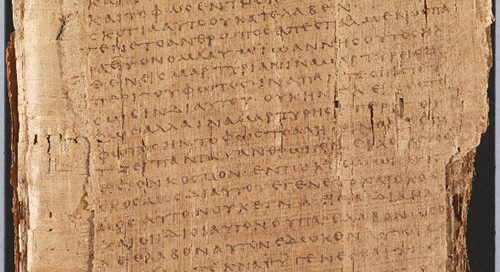
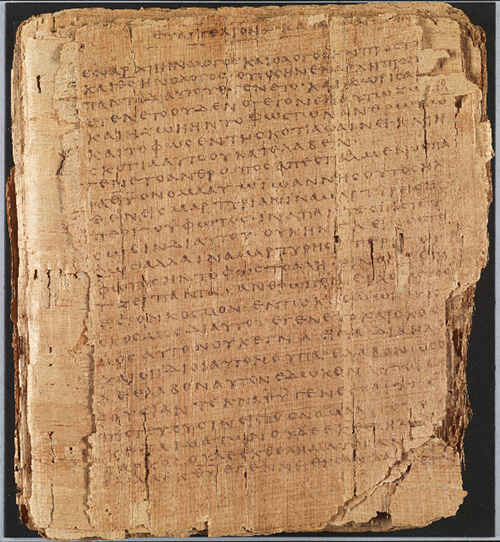
Here is the second post by Brent Nongbri on his recent book God's Library.    I mentioned in the first of his posts that the book is "ground-breaking."  In part that's because he challenges the widely accepted dates of a number of our earliest surviving manuscripts of the New Testament.   Here he talks about his further explorations of this problem.   The basic question: When scholars say "This manuscript dates from the fourth century" (or the second, etc.): how do they *know* that?  Or do they??  A lot of scholars will not be happy with Brent's conclusions!  But no one can simply write him off -- he gives some very convincing analyses.... - Brent Nongbri’s most popular books are Before Religion: A History of a Modern Concept and God's Library: The Archaeology of the Earliest Christian Manuscripts.   *********************************************************** In my last post (HERE), I talked a little bit about some of the interesting stories of discoveries of ancient Christian manuscripts I uncovered while researching my recent book, God’s Library. What I would like to do [...]

2025-09-10T12:45:01-04:00June 4th, 2019|New Testament Manuscripts, Public Forum|

God’s Library Part 1: Finding Ancient Christian Manuscripts in Egypt. Guest Post by Brent Nongbri

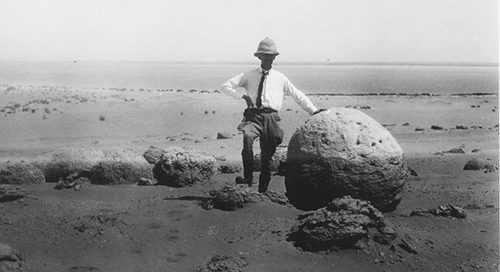
Here is a post by Brent Nongbri, from whom we have heard before on the blog.  His recent book on early Christian manuscripts, especially those of the New Testament, is ground-breaking and insightful.  He will give us a couple of posts devoted to it.  Here's the first. - Brent Nongbri’s most popular books are Before Religion: A History of a Modern Concept and God's Library: The Archaeology of the Earliest Christian Manuscripts.   *********************************************************** Bart suggested that a book I recently wrote might be of interest to readers of this blog, and he invited me to write a couple posts about it. The book is called God’s Library: The Archaeology of the Earliest Christian Manuscripts. It’s an introduction to early Christian manuscripts as archaeological artifacts. What exactly does that mean? Well, lots of excellent scholars have been studying our earliest Christian manuscripts for decades (in the case of some manuscripts, for centuries!), but they have mainly been interested in the texts that these manuscripts carry and not so much in the books themselves as physical [...]

2025-09-10T12:45:01-04:00May 28th, 2019|New Testament Manuscripts, Public Forum|

Were Miracle Stories Originally in the Gospels?

Looking through old posts on the blog, I came across this very interesting and important question from seven years ago.  It's a question I continue to get on occasion, so I thought we all might profit by thinking about it again.  (And now, older and wiser, I would answer almost exactly the same way!) QUESTION: I have looked up the content of all the papyri I'm aware of (off of links on wikipedia, so who knows if they're accurate). It is my understanding that although p52, p90, and p104 are dated around 125-150 AD, they contain fragments of John 18 and Matt 21 only, and that it's not until 200 AD that manuscripts emerge which actually contain accounts of supernatural actions by Jesus. So, it's possible that accounts of miracles existed in copies that got destroyed, but is it fair to say that the earliest available copies of accounts of Jesus's supernatural actions date from around 200 AD? In other words, assuming people on average had kids by age 20 back then, and thus 20 years counts [...]

My Very First Post: Do Textual Variants Matter??

In three days we will hit the seventh-year anniversary of the blog.   I thought it would be fun (for me) to look at the earliest posts.  Here is the very first one, from April 3, 2012  (I've edited it a bit to tone down the rhetoric; I was a bit more hot-headed in those days!)   It's about one of the most interesting and hotly disputed topics I've dealt with throughout my career. ******************************************************************** Probably more than any of my other books, Misquoting Jesus provoked a loud and extensive critique from scholars – almost exclusively among evangelical Christians, who appear to have thought that if readers were “led astray” by my claims in the book they might be in danger of losing their faith or (almost worse!) changing what they believed so that they would no longer be evangelical. I’m not so sure there is really much danger in presenting widely held scholarship to a lay-readership, and so I was a bit surprised at the vitriol I received at the hands of some of my evangelical [...]

2025-09-10T12:44:22-04:00March 31st, 2019|Bart's Critics, New Testament Manuscripts|

Did Jesus Pray “Father Forgive Them” from the Cross?

I recently received an important question about a highly significant textual variant in Luke 23:34, the one and only place in the NT where Jesus prays for those responsible for his death “Father, forgive them, they don’t know what they’re doing.”  The verse is not found in the other Gospels, and interestingly, it is also not found in some of the important manuscripts even of Luke.  And so the question: is it a verse that some scribes inserted into Luke?  Or is it a verse that other scribes decided to take out?  It’s one or the other! When I received the question I was sure I had dealt with it on the blog before.  But I’ve checked.  Nope.  Never have.  But I was even more sure I had written about it somewhere.  It took me a long time to track it down, but I’ve uncovered it in an article that I wrote called “The Text of the Gospels at the End of the Second Century,” now found in a collection of my more scholarly essays [...]

Why Textual Criticism Seemed to Be on Death’s Door

  In last week’s readers’ mailbag I started to answer a question that I never finished – in fact, I never got around to the question!  Here it is again. QUESTION: Is there a story (post) about your move from textual criticism to other things? RESPONSE: In my two-part (non-)response to this question I first explained that my training in graduate school actually was not in textual criticism, but was mainly in the interpretation of the New Testament and the history of earliest Christianity.  But my passion was textual criticism -- that is, analyzing the surviving manuscripts of the New Testament – and related textual witnesses [early translations of the NT into other languages; and especially the quotations of the NT in the writings of early church fathers] – in order to determine both what the authors originally wrote and figuring out how, why, and when the text came to be changed by scribes who were copying it. It was precisely because my training was actually in something different from my passion that I ended [...]

Pursuing My Passion for Textual Criticism

Yesterday I started answering the question of how I moved on from doing research principally on New Testament textual criticism to do other things, mainly involving different aspects of the literature and history of Christianity in the first three centuries CE.   I pointed out there that my training/education was actually not in textual criticism, but mainly in the exegesis (and theology) of the New Testament, and on various aspects of the history of earliest Christianity (from the historical Jesus to the formation of the canon to early heresy and orthodoxy etc.). But even though that was my *training*, my principal interest all along had been textual criticism, figuring out what the original wording of the New Testament in Greek was (verse by verse by verse), and seeing both how and why the text had been changed by scribes over the years.  This was an interest that was generated very early on in my academic career.  In fact, before I had an academic career.  Before I or anyone else could have imagined I’d have an academic [...]

What *Greek* Version of the New Testament Do I Use?

  I often indicate that when citing the New Testament in English, I’m giving my own translation, and that understandably has led some people to think I’ve actually citing a completed translation that I’ve made but not published.  A reader of the blog recently asked me how he could get access to the translation.  But I’ve never written a translation of the NT; when I say that a quotation is in “my” translation I simply mean that I’m reading the Greek with my eyes, translating it in my brain, and typing it with my fingers.   That’s a typical procedure for NT scholars. The reader then asked an interesting and important corollary question: how do I know what Greek to be translating?  Here’s the question and my response.   QUESTION: How do you or any professional translator choose and get the right Greek version of the NT? I understand there were many manuscripts discovered and they are different in terms of content and time of writing. Many of them incomplete and none of them original. Is [...]

2025-09-10T12:43:27-04:00January 13th, 2019|New Testament Manuscripts, Reader’s Questions|

Fundamentalist Arguments Ad Absurdum about the “Original” Text of the NT

I’ve been looking for a scrappy question to tangle with, and today I received one!   QUESTION: You make the case that we do not have the original New Testament manuscripts.  In fact, we do not have any complete manuscripts of books that eventually became part of the New Testament until the 3rd century, correct?  The response often given by fundamentalist Christians is this:  So, you don't believe that Socrates died by drinking hemlock?  You don't believe that Julius Caesar was Emperor?  You don't believe that Plato wrote Plato's Republic?  The manuscripts for Jesus are superior in quality to the manuscripts for other historical figures. This is sort of a sneak way of convincing people that if they don't accept Jesus (his historicity or divinity?) than you don't believe anything about ancient history.  I am guessing that you aren't a scholar of ancient Greece.  But in a debate with a fundamentalist Christian, it's often tempting to pretend to be one simply to swat away these silly arguments. What do you think is the best argument [...]

2025-09-10T12:43:27-04:00January 6th, 2019|New Testament Manuscripts, Reader’s Questions|

Did Jesus Write Anything in the New Testament?

I have mentioned two apocryphal letters forged in the name of Jesus himself, one written to a King Abgar and the other, well, dictated to the cherubim in heaven from the cross.  Several readers have asked me about New Testament examples, one in the famous story of the woman taken in adultery in John 8, and the other the seven letters allegedly dictated by Christ in Revelation 2-3. As to the first, yes, as many of you already know, even though there is an account of Jesus writing on the ground in John 8 (he is writing, by the way, not doodling; the Greek is fairly clear on the point) (we are not told *what* he is writing; there are about 97 theories about that, each one the favorite of one person or another….), this account was not originally in John.  It is a scribal addition to the story.   (BTW: one recent NT scholar, Chris Keith, has written an entire book arguing that the passage was inserted by scribes precisely to show that Jesus was [...]

2025-09-10T12:43:11-04:00December 7th, 2018|Historical Jesus, New Testament Manuscripts|

Finishing my Dissertation

This is the third and final post I'll do on my dissertation the Gospel quotations in the writings of Didymus the Blind, advised by great New Testament scholar Bruce Metzger. - Bruce Metzger is the author of The Early Versions of the New Testament and The Text of the New Testament: Its Transmission, Corruption, And Restoration.   Different dissertation advisors have different approaches to supervising a dissertation. Some are extremely hands on, to the point of working over every thought and every sentence. Not too many are like that, because if they were, they would never do anything else with their life. Plus, the idea is for the student to figure it out and get good at it. That takes some trial and error. Other advisors go for the big picture and like to talk over the big ideas. Others basically don’t give a rip how the dissertation is coming along – they want to see it at the end, and when it’s done, they’ll tell the student whether it’s good enough or not. Others [...]

The Core of My Dissertation on The Gospel Quotations of Didymus the Blind

Here is the second of three posts on how Bruce Metzger directed my rather technical dissertation on the Gospel quotations of the fourth-century church father Didymus the Blind, from six years ago on the blog. THIS IS A CONTINUATION OF MY POSTS OF MY RELATIONSHIP WITH BRUCE METZGER, MY MENTOR As I started thinking about how to write up this second post on my dissertation (the first post was posted some days ago), I remembered one of my clearest pieces of advice that I ever gave to myself, many years ago now, based, already then, on substantial experience.  Never , ever, NEVER ask a graduate student what s/he is writing the dissertation on.   They invariably will tell you, and it will take a half hour, and your eyes will glaze over in 30 seconds.   So just don’t do it.   With that principle in mind, I think I had better not go into all the ins and outs of the dissertation. I’ll just go into some of them…. The reason it is so painful listening to [...]

Bruce Metzger and Me: Finding a Dissertation

Bruce Metzger, my mentor in graduate school, for both my Master's degree and my PhD, has been invoked a number of times in recent comments on the blog.  I thought it might be interesting to repost a few reminiscences I made about my work with him.  These come from posts that appeared six years ago -- when most of you weren't on the blog.   They will all be on my dissertation. When I entered my PhD program at Princeton Theological Seminary, I knew already that I wanted to specialize in the study of the Greek manuscript tradition of the New Testament. As I indicated in my earlier posts, that’s why I went there, because Metzger was the country’s leading expert in this field, and one could argue the leading expert in the world (some Germans would contest the point!). While doing my Master’s thesis for Metzger I read widely in the secondary literature on textual criticism, and came to be highly influenced by a scholar named Gordon Fee. Fee is an interesting and important figure. [...]

What I Saw at St. Catherine’s Monastery at Mount Sinai

Yesterday I responded to a reader of the blog who wanted me to repeat a post from a few years ago about my visit to St. Catherine's Monastery at the foot of Mount Sinai, the famed place where Moses allegedly received the Ten Commandments.   The full story took two posts, and here is now the second, where I explain one of the most memorable experiences of my travels. *************************************************************** In my last post I began to relate an anecdote about a traveling adventure I had several years ago, when giving lectures for a UNC trip to Egypt and Jordan with a stop at the famed St. Catherine’s monastery in the southern part of the Sinai peninsula, the place where Tischendorf had discovered the biblical manuscript codex Sinaiticus in the mid 19th century, and where a fire at the monastery in the 1970s had uncovered a hidden room found to contain manuscripts, including the pages from the Old Testament of the codex Sinaiticus that Tischendorf had not come away with from the monastery when he took [...]

Does Luke Flat Out Contradict Himself?

Sometimes readers ask questions that have answers they probably would not suspect in a million years.  My guess is that this is true of the following interesting query about a contradiction between the Gospel of Luke and the book of Acts (written by the same author) about the ascension of Jesus.   QUESTION: Talking of authors who contradict themselves any idea why Luke has Jesus ascending on the day of his resurrection but Acts places it 40 days later!? This seems like quite an obvious mistake for the same writer to make.   RESPONSE: I explain the problem and try to come up with a solution in my book The Orthodox Corruption of Scripture.  Here is what I say there (edited to get rid of some of the technical discussion that is not directly germane to the question): ****************************************************************************** How did the proto-orthodox doctrines of Jesus’ bodily ascension and return in judgment affect the text of Scripture? I begin by considering a problem that proves particularly difficult to adjudicate. The final verses of Luke’s Gospel [...]

Non-Disclosure Agreements

Several people have made comments or raised questions about Non-disclosure Agreements with respect to Dan Wallace and the so-called (but no longer) First Century Mark.   For many years Dan refused to explain what he was talking about when he mentioned in the public debate with me in February 2012 a new discovery of a Gospel of Mark that dated to the first century.  In a later post I may say something about why I was immediately skeptical about it (he apparently is going on record now for saying that my reaction of disbelief was inappropriate; I don’t think he liked my humor at the time.  But, well, I was incredulous).  But here let me say something about NDA’s. I myself signed a NDA once connected with the discovery of an ancient Christian manuscript, so I have some limited experience with the matter – although my direct knowledge comes from just this one instance.  Otherwise what I know has been picked up just by paying attention. My case involved the newly discovered Gospel of Judas.   I [...]

What the New Fragment of Mark’s Gospel Looks like (the so-called First-Century Mark)

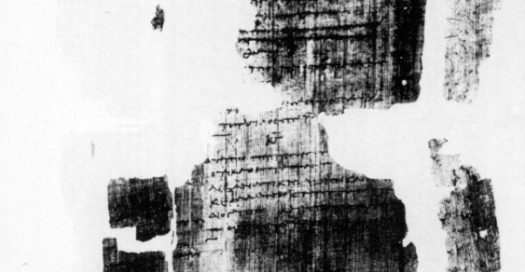
Like many of you I have many questions about the bizarre way the discussion of the so-called “First-Century Gospel of Mark” unfolded.  I was intimately connected with the first announcement of the discovery, which was made precisely in order to trump me in a public debate.  As it turns out the announcement was based on false information acquired through hearsay.  But that’s the past, and Dan Wallace has apologized, so that is that. There are still questions about how the affair unfolded, but I’m not going to go into that here.   What there is now no longer any doubt about is the manuscript fragment that is involved.  It is not from the first century but from the late second or early third.  That’s not nearly as impressive but it is still mighty impressive.   Until now we had only one manuscript of Mark that dated that early.  Now we have two. The other one is P45 (P means “Papyrus” manuscript and 45 means it is the 45th papyrus ms. discovered and published) which is highly fragmentary, [...]

2025-09-10T12:41:08-04:00May 28th, 2018|New Testament Manuscripts|

We Do *NOT* Have a First-Century Copy of the Gospel of Mark

As most of us have suspected for years now, there is in fact no first-century copy of the Gospel of Mark.  If fortune smiles upon us, maybe one will eventually be discovered.  But it hasn’t been yet.  Dan Wallace, our lone public source for the existence of such a thing (announced with some flair at a public debate I had with him in 2012) has finally provided the necessary information: his claim that such a copy existed was based on bad information.   He lays it all out here.   https://danielbwallace.com/2018/05/23/first-century-mark-fragment-update/ .   I’ve copied the post here, below. He is gracious to apologize to me, and I understand about non-disclosure agreements.  But at the same time, I have lots of questions about the entire affair.  You may have some too.  If so, let me know.  I’ll answer the ones I can and ask the ones I can’t. Daniel Wallace's most popular books are Revisiting the Corruption of the New Testament and Reinventing Jesus. Here is Dan's Post:   **************************************************************************************************   First-Century Mark Fragment Update ON 23 MAY 2018 BY DANIEL B. WALLACEIN CONTEMPORARY [...]

A Different First-Century Mark? An Interesting Piece of Sleuth Work

One of the many pleasures of doing this blog is that there are some highly trained scholars who are members who interact with the posts on occasion.  One of them is Brent Nongbri, whom I first knew when he was a graduate student at Yale (PhD 2008) and who for several years was an Honorary Research Fellow at Macquarie University in Sydney, Australia.  One of his fields of expertise is papyrology, the study of ancient papyrus manuscripts. He's also the author of Before Religion: A History of a Modern Concept and God's Library: The Archaeology of the Earliest Christian Manuscripts, among others. Brent was interested in my posts on the alleged first-century copy of the Gospel of Mark, and contacted me to let me know about an article he wrote on a related matter -- yet *another* manuscript fragment allegedly connected with Mark and also allegedly from the first century, one that almost none of the rest of us scholars have heard about.  He had himself posted about it, and he has given me permission [...]

2025-09-10T12:41:06-04:00May 10th, 2018|New Testament Manuscripts|

Why Would It Matter If There Were a First-Century Copy of Mark?

After making my post yesterday about the bogus apologetic claims being made about the existence of a copy of Mark from the first century, I remembered I had posted on the matter some years ago on the blog.  I looked it up, and found a set of reflections on a closely related topic: what difference *would* a first century copy of Mark make, if it doesn't make the difference these breathless apologists are making?   Here is what I said at the time, at the beginning of 2015 (I've edited the post slightly here for its new context). ******************************************************************************************* I personally think that there are no shenanigans going on when Dan Wallace and Craig Evans tell us that a fragment of the Gospel of Mark has been found and that it can, with reasonable certainty, be dated to the late first century.   I’m not saying that I know they are right.  Far from it.   In fact, one of the most disconcerting things about this claim is that they are not making the papyrus available so real [...]

2025-09-10T12:41:06-04:00May 9th, 2018|New Testament Manuscripts|
Go to Top