Sorting by

×

A Bizarre “Gnostic” Religion: The Naassenes – Guest Post by Dr. David Litwa

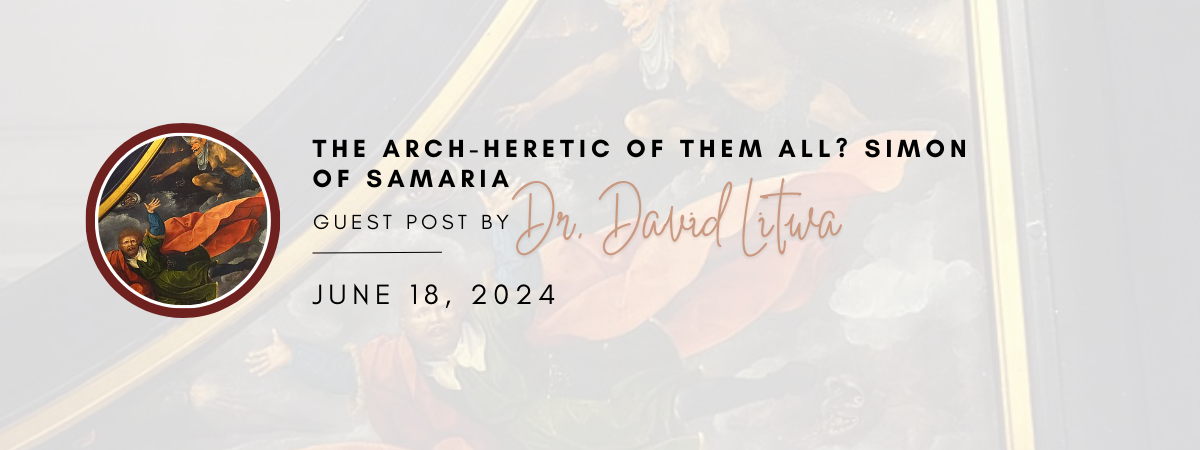
I'm pleased to publish three posts by guest blogger David Litwa, one of the most prolific scholars of New Testament and Early Christianity over the past ten years.  David was a graduate student at Duke some years ago and took a couple of my PhD seminars over at UNC.  He is now at Boston College.  (See:  M. David Litwa - School of Theology and Ministry - Boston College (bc.edu) Each of these posts is a tantalizing introduction to a (different) book he has written for a general audience.  This one starts off with a blast!  Let us know what you think! ******************************   It is the only Christian group in antiquity to be accused of homosexual sex, of worshipping a snake, and of attending the mysteries of the Great Mother (Cybele). They worshiped God as Human, explored the Phrygian deity Attis as a manifestation of Jesus, and directly called themselves “gnostics.” They are known through a gossamer thread of tradition, a report preserved only in a worm-eaten medieval manuscript tucked away on Mount Athos, where no [...]

Is There Even Such a Thing as the “Original” Text of Philippians?

  What would it even *mean* to say that we have an "original" letter of Paul to the Philippians? In my previous two posts I began answering a series of questions asked by a reader about how we got Paul’s letter to the Philippians.  In my previous post I explained why some critical scholars maintain that the letter was originally two separate letters that have been spliced together.  That obviously makes the next question the reader asked a bit more complicated than one might otherwise imagine.  And it’s not the only complication.   Here is the reader’s next question: QUESTION:  Do you agree that the first copy of the letter written by Paul to the Philippians was also an original?  RESPONSE:  First off, my initial reaction that I gave a couple of posts ago still holds.  I’m not exactly sure what the reader is asking.  If he’s asking whether a copy of the original letter to Philippians is itself an original of Philippians, then the answer is no.  It is not the original.  It is a [...]

John the Baptist: The Most Influential Religious Innovator in History by James McGrath (Part 3)

Now we have the final installment of James McGrath's thread of posts on the importance of John the Baptist, which, as he argues, most people have overlooked.  What do you think?  Comment and ask away! ****************************** John the Baptist was probably the most significant religious innovator in the history of religion. We’ve failed to see this because of the extent that he has been overshadowed by his followers. This is perhaps the most important point made in my new books Christmaker: A Life of John the Baptist (Eerdmans, June 2024) and John of History, Baptist of Faith: The Quest for the Historical Baptizer (the latter due out in October). In this three-part series I offer an overview of John’s influence based on and incorporating some material from Christmaker so that readers of this blog can get a sense of what awaits them in these books, especially the biography which will be out very soon and which is aimed at a general audience. Part 3: John as Innovator and Leader In recent centuries, we find new [...]

2025-09-10T13:07:27-04:00June 1st, 2024|Public Forum|

REMINDER: My Webinar — When Does Life Begin? The Status of the Unborn in the Biblical Tradition

In case you missed it last time, here's my announcement of the course I'll be doing on this coming Sunday.  It's a difficult, very complicated, and often incredibly important topic.  I hope you can come! ************************ I'm pleased to announce that I will be doing a new two-lecture course on a rather timely topic, When Does Life Begin: The Status of the Unborn in the Biblical Tradition.  The course is not connected with the Blog per se, except insofar as I'm doing it and many of you might be interested.   For more information and registration, go to http://www.bartehrman.com/life Even if you can't come to the live lectures, you will be able to get a recording of the course to watch at your leisure. Here's a description of the course: **********************               The issue of abortion is one of the most divisive controversies in our country.  In many ways it comes down to a very basic question:  When Does Life Begin? At conception?  Later in gestation?  When the fetus is viable?  At birth? For many people the question is [...]

2025-09-10T13:07:41-04:00May 30th, 2024|Public Forum|

John the Baptist: The Most Influential Religious Innovator in History by James McGrath (Part 2)

Is John the Baptist THE most significant religious innovator in religion, ever?  Here James McGrath (  James F. McGrath - Wikipedia  ) continues with the second of his three controversial posts on John the Baptist: the first few sentence remind you of the basic claim and the books in which he develops it -- the rest expands his views for us.  What do you think? ****************************** John the Baptist was probably the most significant religious innovator in the history of religion. We’ve failed to see this because of the extent that he has been overshadowed by his followers. This is perhaps the most important point made in my new books Christmaker: A Life of John the Baptist (Eerdmans, June 2024) and John of History, Baptist of Faith: The Quest for the Historical Baptizer (the latter due out in October). In this three-part series I offer an overview of John’s influence based on and incorporating some material from Christmaker so that readers of this blog can get a sense of what awaits them in these books, [...]

2025-09-10T13:07:27-04:00May 29th, 2024|Public Forum|

John the Baptist: The Most Influential Religious Innovator in History by James McGrath (Part 1)

I am pleased to publish a short series of posts on John the Baptist by James McGrath,  Clarence L. Goodwin Chair in New Testament Language and Literature at Butler University (see James F. McGrath - Wikipedia) based on his TWO new books (one coming out next month, June 2024; the other in October).    The books, as you will see, make some controversial claims -- see his first sentence below! James will be happy to respond to your comments and queries.  So what do you think? ****************************** John the Baptist was probably the most significant religious innovator in the history of religion. We’ve failed to see this because of the extent that he has been overshadowed by his followers. This is perhaps the most important point made in my new books Christmaker: A Life of John the Baptist (Eerdmans, June 2024) and John of History, Baptist of Faith: The Quest for the Historical Baptizer (the latter due out in October). In this three-part series I offer an overview of John’s influence based on [...]

2025-09-10T13:07:27-04:00May 28th, 2024|Public Forum|

An Important Early Christian Writing

  I have been doing a thread in response to a reader who asked how we know we have the originals of the books of the Bible.  On one hand, the question involves how we know the words the authors originally wrote.  I've been dealing with that question over a number of posts.  But the question has another interesting and less talked about component: what is the "original" for a book that appears to have had chapters or passages added to it here or there?  Or when a book appears in fact to have been several books that were later combined into one book even before scribes started copying what we have today? There are few examples of that in the New Testament, but before dealing with those, I thought it might be useful to mention a less controversial case -- less controversial because hardly anyone has read this particular early Christian writing and even fewer people would regard it as sacred Scripture.  It is one of the "Apostolic Fathers" (the proto-orthodox writers who produced [...]

When Does Life Begin? The Status of the Unborn in the Biblical Tradition.

I'm pleased to announce that I will be doing a new two-lecture course on a rather timely topic, When Does Life Begin: The Status of the Unborn in the Biblical Tradition.  The course is not connected with the Blog per se, except insofar as I'm doing it and many of you might be interested.   For more information and registration, go to http://www.bartehrman.com/life Even if you can't come to the live lectures, you will be able to get a recording of the course to watch at your leisure. Here's a description of the course: **********************               The issue of abortion is one of the most divisive controversies in our country.  In many ways it comes down to a very basic question:  When Does Life Begin? At conception?  Later in gestation?  When the fetus is viable?  At birth? For many people the question is intimately connected with the Bible.  Does the Bible declare, intimate, or assume that the fetus is human?   Some emphatically say yes.  Others say no.  Other are not so sure. In these lecture, we address the question [...]

2025-09-10T13:07:26-04:00May 17th, 2024|Public Forum|

A Major Argument That We Can Be Sure We Have the Original Text

There is one particularly interesting argument sometimes used by those who believe we can know with good certainty what the original text of the New Testament books said.  This is the argument called the “tenacity of the tradition.”  The argument is prefaced on the very interesting phenomenon that whenever papyri manuscripts are discovered – say from the third or fourth Christian century – they almost *never* contain new variant readings that we did not already know about from later manuscripts, of say the seventh to fifteenth centuries.  Instead, the readings of these early manuscripts re-appear in later manuscripts. The conclusion that is sometimes drawn, then, is that that tradition is “tenacious.”  That is to say, later manuscripts did not invent their variant readings, but in almost every instance replicated variant readings that they got from earlier manuscripts.   And one corollary that is sometimes drawn, then, is variant readings do not disappear but continue to be replicated in later witnesses.   If that is the case, then the “original” readings almost certainly still survive somewhere in the [...]

2025-09-10T13:07:26-04:00May 16th, 2024|New Testament Manuscripts, Public Forum|

Even If We Can Imagine an “Original” Text, How Could We Know if We Had It?

Scholars sometimes debate whether we can know that we have reconstructed the original text of the New Testament at every point – or even every important point.  To me the answer was and is self-evidently, no, of course not.  Many of my conservative evangelical critics think that I’m being overly skeptical, that since we have thousands of manuscripts of the NT, we can surely know better what the authors of the NT said than any other authors from the ancient world.  My view is that this might be true, but that simply shows that we can’t know what *most* authors of the ancient world actually said, word for word. Why does that matter?  I’ll explain in a second, for the bulk of this post.  But first let me put the matter in very simple form, at least insofar as I can.  Suppose Matthew’s Gospel was circulated for the very first time in Antioch of Syria around the year 85 CE.   We’ll call that first circulated copy the “original.”  Someone copied the original in his church.   [...]

2025-09-10T13:07:26-04:00May 12th, 2024|New Testament Manuscripts, Public Forum|

Is There an Original Text Even of One of MY Books??

  Here's a way to think about what it can even mean to talk about an "original text," from a post many years ago, published when I was just finishing up one of my books. ****************************** In my debates with other scholars about whether we can know (for certain) (or at they sometimes put it, with 99% certainty) what the original words of the New Testament were, I always argue that we cannot “know,” and they argue we can.   Let me explain one reason that I find their position highly problematic by dealing with a broader issue.  What exactly *is* the original text of a document?  If we can’t agree on that very basic and fundamental question, then we can’t very well agree on the possibility of getting back to the original. I’ve dealt with this problem on the blog before, but let me approach if from a different angle this time.  I have just finished my recent book on how memory studies can help us think about the oral traditions of Jesus [...]

2025-09-10T13:07:25-04:00May 11th, 2024|New Testament Manuscripts, Public Forum|

May Gold Q&A: Keep Those (Metaphorical) Cards & Letters Coming!

Gold and Platinum members, Time again for our monthly Gold Q&A. But I can't do it (literally!) without YOU!  Send me your urgent (short, to-the-point) questions on any blog-related topic.  Have you submitted a question in the past that wasn't picked? Feel free to try again. Don't put your question in a Comment, though--send it to Diane at [email protected]. DEADLINE: Please get your question in by Friday of next week (05/17/2024) at midnight (whenever midnight is in your time zone).  

2025-09-10T13:07:13-04:00May 9th, 2024|Public Forum|

How Can We Even IMAGINE an “Original” Text of the Gospels?

QUESTION: When it comes to the gospels, how do we define the ‘original text’? Do we define it as the original manuscript that was first penned by the author, or do we define it as the gospels in their most settled canonical form?   RESPONSE: As it turns out, this is a complicated and endlessly fascinating question that, so far as I have been able to work out over the past twenty years of thinking about it, has no clear and obvious answer! By way of very simple background for readers not completely on top of the textual situation we are confronting when it comes to the Gospels (or any of the other books of the New Testament) (or of any ancient Christian writings at all) (or, in fact, of any writings of any kind at all that come down to us from antiquity) we do not have the “originals” (however we define that term: see below!).  What we have are copies made from copies, which were themselves made from copies.  Most [...]

Women in the World of Jesus

In my previous post I talked about the traditions that indicated that Jesus associated with women publicly during his ministry – in an attempt to use established historical criteria to know whether the prominence of women in the earliest Christian communities may have had precedence in the life of Jesus himself. What about the contextual credibility of these traditions? It is true that women were generally viewed as inferior by men in the ancient world (see below). But there *were* exceptions: philosophical schools like the Epicureans and the Cynics, for example, advocated equality for women. Of course, there were not many Epicureans or Cynics in Jesus' immediate environment of Palestine, and our limited sources suggest that women, as a rule, were generally even more restricted in that part of the empire with respect to their abilities to engage in social activities outside the home and away from the authority of their fathers or husbands. Is it credible, then, that a Jewish teacher would have encouraged and promoted such activities? We have no solid [...]

Reminder! WHY PROPHECY FAILS! Fundraiser for Sudan With James Tabor

If you haven't taken note of this yet, please do!  It's gonna be a really interesting topic.  Here's the original post. ***************** I am very pleased to announce a fund-raiser for the Bart Ehrman blog on MONDAY May 6, a special event in which I interview fellow New Testament scholar and social commentator Dr. James Tabor on a topic sure to be of interest.  James, as you may know, is a retired professor of Religious Studies at the University of North Carolina Charlotte.  He is a public figure who has a large following on his own blog and in his many public appearances.  Among his numerous popular is Why Waco, which deals directly with the 1993 disaster at Waco just over 31 years ago.  James was consulted by the FBI, testified before a joint Committee in the US Congress on Waco, and was able to interpret the apocalyptic views endorsed by the Branch Davidians under David Koresh. The topic of our conversation will be connected to a broader issue that lay behind the disaster.  As you [...]

2025-09-10T13:07:25-04:00May 3rd, 2024|Public Forum|

Jesus and Women

In my previous post I tried to show that women – contrary to what one might think – were quite prominent in the ministry and churches established by Paul. One naturally wonders why that might be, given the fact that women came to be silenced in later Christian traditions (continuing on in some rather notable circles today). One answer for why women played important roles in the life of the early church is that they may have played an important role in the life of the historical Jesus. As readers of this blog know, it is not an easy matter establishing what actually happened in Jesus’ life. Historians need to apply historical criteria to all of the traditions that survive about Jesus: independent attestation (if a tradition is independently attested in multiple sources, it is more likely to be authentic); dissimilarity (if a tradition cuts against the grain of what Christians would have wanted to say about Jesus, it is more likely authentic); and contextual coherence (any tradition that cannot make sense in [...]

Does My Work on the Historical Jesus Confirm the Quran?

Here is a final post dealing with the Quran.  Well, a post from years ago that dealt with the Quran and two other unrelated issues, in one of those rare moments some years ago where I decided to try a rapid-fire approach to questions I get.  They're all great questions!  Here's the repost: ****************************** Here is the weekly Readers’ Mailbag, three questions this time – one about my  alleged “support of Islam against Christianity,” one about why we think the NT Gospels were originally written in Greek, and one about what I mean when I talk about the views held by the majority of “critical” scholars (as opposed to what other kind of scholar?). COMMENT:  [After this person pointed out that whoever said I was about ready to convert to Islam was obviously makin’ it up, or influenced by someone else who was makin’ it up, this Muslim reader commented as follows:]  Anyways, that won’t stop us from using your awesome arguments against Christianity. You confirmed like 99% of Islamic belief about Jesus without [...]

2025-09-10T13:07:14-04:00April 30th, 2024|Public Forum|

Fundamentalist Christians Are Not the Only Ones to Make Dumb Arguments…

My high school debate colleague (who later became a national debate champion as a sophomore in college...) used to always say:  "Never underestimate the power of human stupidity."  Boy did he ever get that right.  Here's another post connected with the Quran.  The post is NOT dealing with anything at all negative with Islam or the Quran itself.  It's about horrible arguments that people make about it.  They are right down there on the ridiculousness-scale as those fundamentalists sometimes make about Christianity and the New Testament.  As I point out in this republished post from years ago. ****************************** I’m always puzzled about why smart people make (and believe) such stupid arguments.  We see this all the time, of course, in political discourse and family disagreements, not to mention department meetings, but since my field is religious studies I hear it the most in connection with the great religions of the world.  Actually, I guess I find it less puzzling than aggravating. A lot of conservative Christians get upset with me when I push [...]

2025-09-10T13:07:14-04:00April 28th, 2024|Public Forum|

Am I Converting to Islam?

While I"m on the issue of Islam...  Here is a post of a question I still get at times, to my amazement. ****************************** READER COMMENT: I received a message on Facebook a couple of weeks ago from a person who has been proselytizing to me about the Muslim faith. This has happened a few times with others on your FB page. I guess that’s what they do. Anyway, the other day I asked him if he was on your blog. He responded with a yes. Then he said that we (the members) were going to get a surprise from you soon. I asked him how so, and he said that you would be reverting to the Muslim faith. Apparently, reverting is something like converting according to him.  I asked him how he knew this information, and he said a friend of his (a friend that he only knows through FB) that is a neighbor of yours said you were very impressed with the Quran and that you haven’t made it public about reverting, but you [...]

2025-07-16T17:47:41-04:00April 27th, 2024|Public Forum|
Go to Top