Sorting by

×

How Do We Explain the Messianic Secret?

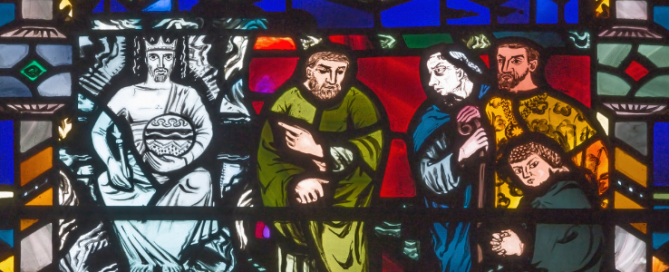
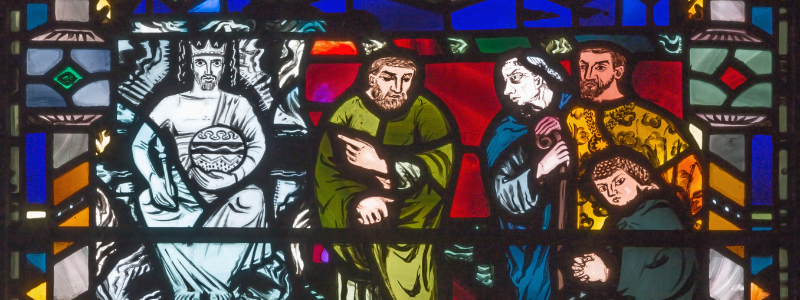
What is the Messianic Secret - For this week’s Readers’ Mailbag, I address a question of central importance for understanding the Gospel of Mark, our earliest Gospel and often thought to be the one that best represents what actually happened in the life of Jesus.  I’ll have to *explain* the question before answering it (!).   Then most of this post will be setting up the answer with the crucial background information, which, as it turns out, the vast majority of casual Bible readers have never even thought of or heard.  QUESTION; I’ve looked back through the archives, but I can’t find anything on Mark’s “Messianic secret”. It’s possible I simply missed it, but if you haven’t dealt with it before would you consider doing a post on the subject, please?! Particularly on why it’s no longer accepted by scholars. What is the Messianic Secret RESPONSE: The “messianic secret” is a term that over a century ago came to be applied to the Gospel of Mark to explain one of its most distinctive and puzzling features.  [...]

2025-09-10T12:43:45-04:00February 3rd, 2019|Canonical Gospels, Historical Jesus, Reader’s Questions|

If Jesus Wasn’t God, Was He Necessarily Either a Calloused Liar or a Raving Lunatic?

This is my my last of three blasts-from-the-pasts dealing with fundamentalist, or conservative evangelical, forms of Christianity, this time addressing the claims often made (first by C.S. Lewis, who was decidedly *NOT* a fundamentalist) that since Jesus called himself God, he either was a bald-faced liar, a raving lunatic, or the Lord of the universe.  No other option.  Or ... is there? - C.S. Lewis was the author of The Chronicles of Narnia, Mere Christianity, and The Problem of Pain.   QUESTION: Do you think Jesus was a great moral teacher?  If you think this is the case would you mind blogging about it? Fundamentalist are using C.S Lewis approach in this matter. Apparently they are happier if people call Jesus a lunatic vs. a great moral teacher.   RESPONSE: In my last post I indicated what I think about Jesus as a great moral teacher: yes he was one, but completely and irretrievably in an apocalyptic context that we no longer share with him. In a future post I may deal with the question of [...]

Readers’ Mailbag 1/20/2019: The Only Story of Jesus as a Boy in the New Testament

Based on the feedback I’ve received on the blog this past week, I’ve decided to reinstate the weekly Readers’ Mailbag.   I have actually continued responding to questions since abandoning the feature of the blog, but in a less formal way.  Formalizing it seems like a popular option, and so I’ll try to do this once a week.   I start this week with an interesting question about Jesus as a boy.   QUESTION Outside the birth narratives, the only canonical story about the young Jesus is in Luke 2, although there are numerous childhood legends in the apocryphal gospels. Do you have any opinion, please, as to why this story of Jesus at twelve made it into Luke?   RESPONSE Over the years I have found among readers of the Bible an almost endless fascination about the “missing” years of Jesus’ life.  The narratives of our earliest and latest canonical Gospels, Mark and John, begin with Jesus as an adult associating with John the Baptism.  In Matthew and Luke, we have the stories of his birth; [...]

2025-09-10T12:43:28-04:00January 20th, 2019|Canonical Gospels, Historical Jesus, Reader’s Questions|

The Dangers of Fundamentalism

I'm out of town for a long weekend and so away from my books, and have decided to re-post some particularly intriguing (IMHO) posts from many years ago.  Here's a hot one.   QUESTION: You note that fundamentalism is dangerous and harmful. How do you define fundamentalism and why do you think it’s dangerous?   RESPONSE: There are of course actual definitions of “fundamentalism” that you can find in scholarship on religion, but I sense that you’re asking more for a rough-and-ready description. Years ago I started defining fundamentalism as “No fun, too much damn, and not enough mental. When I was a fundamentalist myself (yet to be described) I understood it in a positive way. Originally, in Christian circles, it referred to believers who held on to the “fundamentals” of the faith, which for us included such things as the inspiration of Scripture, the full deity of Christ, the Trinity, the virgin birth, the physical resurrection, and, well, probably a collection of other doctrines. Fundamentalism, for us, was to be differentiated from liberalism, which [...]

2025-09-10T12:43:28-04:00January 18th, 2019|Reader’s Questions, Reflections and Ruminations|

What *Greek* Version of the New Testament Do I Use?

  I often indicate that when citing the New Testament in English, I’m giving my own translation, and that understandably has led some people to think I’ve actually citing a completed translation that I’ve made but not published.  A reader of the blog recently asked me how he could get access to the translation.  But I’ve never written a translation of the NT; when I say that a quotation is in “my” translation I simply mean that I’m reading the Greek with my eyes, translating it in my brain, and typing it with my fingers.   That’s a typical procedure for NT scholars. The reader then asked an interesting and important corollary question: how do I know what Greek to be translating?  Here’s the question and my response.   QUESTION: How do you or any professional translator choose and get the right Greek version of the NT? I understand there were many manuscripts discovered and they are different in terms of content and time of writing. Many of them incomplete and none of them original. Is [...]

2025-09-10T12:43:27-04:00January 13th, 2019|New Testament Manuscripts, Reader’s Questions|

Fundamentalist Arguments Ad Absurdum about the “Original” Text of the NT

I’ve been looking for a scrappy question to tangle with, and today I received one!   QUESTION: You make the case that we do not have the original New Testament manuscripts.  In fact, we do not have any complete manuscripts of books that eventually became part of the New Testament until the 3rd century, correct?  The response often given by fundamentalist Christians is this:  So, you don't believe that Socrates died by drinking hemlock?  You don't believe that Julius Caesar was Emperor?  You don't believe that Plato wrote Plato's Republic?  The manuscripts for Jesus are superior in quality to the manuscripts for other historical figures. This is sort of a sneak way of convincing people that if they don't accept Jesus (his historicity or divinity?) than you don't believe anything about ancient history.  I am guessing that you aren't a scholar of ancient Greece.  But in a debate with a fundamentalist Christian, it's often tempting to pretend to be one simply to swat away these silly arguments. What do you think is the best argument [...]

2025-09-10T12:43:27-04:00January 6th, 2019|New Testament Manuscripts, Reader’s Questions|

Do Any Forgeries Claim to be Written by Jesus?

I have received an interesting question about ancient forgeries.  If we have lots of forgeries in the name of Peter -- and lots of others in the names of other apostles: Paul, James, Jude, Thomas, Philip, etc. etc. -- why don't we have any forgeries allegedly written by Jesus himself?  As it turns out we do.  The most famous was, at one time, well known indeed. Here is the question and my response. QUESTION: If Peter was named as an author of these works, why not name Jesus then of others(that we know of )? Was it understood within the community that, and why, he chose not to write his views down -- or was this too bold of a move even for a shameless forger?  Or he was still deemed less accessible than his followers?   RESPONSE: Yes indeed, there is a one-time famous correspondence between Jesus and a king who lived in Edessa in Syria named Abgar.. I have translated it anew for the book I published (on all earliest Christian Gospels) with [...]

Question: How Do I Read Books?

    Here is a question I get asked regularly, and I"ve just now seen I answered it on the blog many years ago.  Worth answering it again!  How do I read books?  This is what I said in 2012 and it's still true in 2018! ***************************************************************************** QUESTION: How do you go about reading books? Which methods do you use in order to read as much as possibile? How do make plans how much to read? Do you highlight things in books? Do you you’re your own comments? Summaries? Any other tips? RESPONSE: Ah, this is an interesting question. As it turns out, there’s not an easy answer. That’s because there are many different ways I read books, depending on what kind of book it is. I realize we’re talking about books dealing with scholarship – not Victorian novels! But I read different books differently depending on what it is, what it’s about, and what I want/need to get out of it. When I was in graduate school I had a friend who insisted that [...]

2025-09-10T12:42:57-04:00November 19th, 2018|Reader’s Questions, Reflections and Ruminations|

Old and Ongoing Criticisms!

I was browsing through old posts from the blog and came across this one from almost exactly six years ago, about criticisms people make of my work.   They still make the same wretched criticisms!   But here I try to answer two of the most common ones I hear, based on a perceptive (and non-antagonistic) question about them.   I think the same thing today, as I'm demonstrably older and allegedly wiser. QUESTION: I want to ask your thoughts on something quickly because I think it points out one of the concerns I have with what you write and say. It seems that you have a willingness to take different positions (or maybe emphasize different positions is the right way to say it) depending on where you are and what you're advocating. In your interview with the Infidel Guy and other places, you talk about how ancient writings were dictated all the time. On the Infidel Guy show, for example, you said the following: "Every person who wrote epistles in the ancient world dictated them to scribes". [...]

2025-09-10T12:42:56-04:00November 7th, 2018|Reader’s Questions, Reflections and Ruminations|

The De-apocalypticized Jesus of the Gospel of John

  An important request I received recently!   QUESTION At some point, I would like to hear more about the Gospel of John not having an apocalyptic view of Jesus.   RESPONSE This question relates closely to the work I’ve been doing on the views of the afterlife in the early Christian tradition.   As I’ve pointed out on the blog many times before, John was the last canonical Gospel written, probably 60-65 years after Jesus’ death.  One of the most striking things about John’s account of Jesus message, at this far a remove from Jesus’ life, is that his message has become seriously de-apocalypticized.  In John, Jesus no longer speaks of the coming intervention of God to bring in his glorious kingdom.  Instead, he principally talks about heaven above, and how people can go there by believing in him. That is not to say ... To see the rest of this post you will need to belong to the blog.  If you don't belong, join before it is too late!  The end is near! [...]

2025-09-10T12:42:56-04:00November 6th, 2018|Afterlife, Canonical Gospels, Reader’s Questions|

Today You Will Be With Me in Paradise?

Here is an interesting question I have received closely connected with the work I’ve been doing on the different views about the afterlife – what happens to us when we die? – in the early Christian tradition.  It has to do with a key verse that has been much debated over the years, a verse found only in Luke’s Gospel, in which Jesus assures the “robber” being crucified with him, that he will that day awaken in paradise.  Or *is* that what Jesus says?   QUESTION Now that you mention about the differences in translations I would like to ask about how the Jehovah’s witnesses in their New World Translation bible Luke 23:43: And he said to him: “Truly I tell you today, you will be with me in Paradise.”  They have inserted a comma after today because their bias is that the paradise is in the future not the day Jesus died. Besides their bias do you see any other indication that that rendition would be probable?   RESPONSE: In my book I try [...]

2025-09-10T12:42:56-04:00November 4th, 2018|Afterlife, Canonical Gospels, Reader’s Questions|

The Difference Between Eschatology and Apocalypticism

QUESTION I have recently been reading John Meier's books and he almost always calls Jesus (and John the Baptist), eschatological prophets (once stating Jesus having a "tinge of apocalypticism" or something to that effect). And you always refer to Jesus as an "apocalyptic prophet".   Do you make any distinction  in the terms "eschatological" and "apocalyptic"?   RESPONSE Ah, it’s a good question.  These terms are an endless source of confusion for people – even scholars sometimes.  I think the problem is that different scholars work with different definitions and often they have not thought through carefully the implications of their terminology.  So let me explain how I work it all out, by defining/describing a set of terms that are all closely related but distinct (in my head):  eschatology (and eschatological); apocalypticism; apocalyptic; and apocalypse. Eschatology.   This is a broad term that simply means ... To see the rest of this post, you will need to belong to the blog.  If you haven't joined yet, what are you waiting for?  Remember, the END IS NEAR!!  Join [...]

2025-09-10T12:42:44-04:00October 29th, 2018|Historical Jesus, Reader’s Questions|

My Own Translation of the New Testament?

Here's a question I get on occasion, which I addressed fully six years ago on the blog. QUESTION: Do you have any plans to publish your own "best" version of the NT in English? From reading several of your books, it does seem as though you probably already have a translation sitting in a drawer somewhere. I have not been able to find scholarly reconstruction that was produced in the last three and a half decades. Most of the newer "translations" are theologically motivated and sound more like modern slang. Have any of your colleagues/ students produced a readable version you would recommend? (Thousands of footnotes do not make for a readable text!) I would very much like to see your translation/interpretation sitting on a bookshelf. RESPONSE: No, as it turns out, I have never written out a full translation of the New Testament.   For several reasons.  First, there are a number of excellent translations already available that have been done by some of the best NT scholars on the planet.  My translation would be [...]

2025-09-10T12:42:44-04:00October 28th, 2018|Reader’s Questions, Reflections and Ruminations|

More Apocrypha: A Letter of Jeremiah, (Fascinating) Additions to Daniel, and 1 Maccabees

Here is another installment on my discussion of the Apocrypha/Deuterocanonical books.  The first of the three I discuss here is not well known, but the second and third are historically quite significant. ***************************************************** The Letter of Jeremiah This is one of the shortest books of Apocrypha—it is only one chapter long, and in the Latin tradition of the Roman Catholic Church it is included as the final chapter of the book of Baruch. The book is allegedly written by the prophet Jeremiah, sent to the Judeans bound for Babylonian exile. In exile they will be among people who worship other gods through idols. This book is nothing but an attack on pagan idolatry. The real historical context of the writing is a situation in which Jews around the world were surrounded by idol worship. It may have been produced in the aftermath of the Maccabean Revolt; it appears to have been composed in Hebrew or Aramaic. Much of the book consists of a mockery of ... To learn more about these books, you'll need to [...]

2025-09-10T12:42:43-04:00October 19th, 2018|Hebrew Bible/Old Testament, Reader’s Questions|

More Books of the Apocrypha: Wisdom of Solomon, Sirach, and Baruch

In this post I continue discussing the books of the Apocrypha, accepted as part of Scripture by Roman Catholic and Orthodox churches.  These are important books, historically and culturally – but hardly known among Protestant readers.   Here are three more!  Descriptions are taken from my introduction to the Bible.   The Wisdom of Solomon The Wisdom of Solomon is a book of positive wisdom (recall Proverbs), which claims to be written by the great king of the United Monarchy. In fact it was written many centuries later, by a Jew in the Diaspora, possibly in the first century b.c.e. or the first century c.e. The book celebrates Wisdom as the greatest gift to humans and insists that it involves proper fear and adoration of God, which will lead to eternal reward. Those who lead ungodly lives, on the other hand “will be punished as their reasoning deserves” (5:10). The exaltation of wisdom recalls Proverbs 8, where Wisdom appears as a female consort with God at the beginning of all things. Here too Wisdom is said [...]

2025-09-10T12:42:43-04:00October 17th, 2018|Hebrew Bible/Old Testament, Reader’s Questions|

Some of the Apocrypha: Tobit, Judith, and Additions to Esther

Yesterday I answered briefly a question about the Old Testament Apocrypha/Deuterocanonical books.  I’ve decided to go ahead and describe each of the ten.   This will take several posts.   These are very interesting books, well worth reading, and canonical Scripture for some parts of the Christian church. My summaries here are taken from my Introduction to the Bible.   **********************************************************   Tobit Tobit is a work of historical fiction—by which I mean it is a fictional tale set within a real historical context. Originally the book was written in Aramaic, either in the late third century b.c.e. or the early second. The narrative is set in the eighth century b.c.e. in the city of Nineveh, where the hero of the story, Tobit, has been exiled from his town in Galilee during the conquests of the Assyrian king Shalmaneser. In other words, the account is allegedly taking place after the destruction of the northern kingdom of Israel. The story involves two subplots that eventually come to be woven together. The first is about Tobit himself, who is [...]

2025-09-10T12:42:43-04:00October 16th, 2018|Hebrew Bible/Old Testament, Reader’s Questions|

What Is the Apocrypha (of the Old Testament)?

Here is a recent question I have received about the “Old Testament Apocrypha.”   QUESTION Bart, I hope you won’t mind me asking a totally unrelated question: At the beginning of the Christian Era – how many books of the Hebrew Old Testament did the Greek Septuagint translation contain?   RESPONSE: This is indeed an important topic, one usually overlooked completely by Protestant readers of the Bible.  Here is what I say about the apocrypha in my textbook on the Bible: *************************************************************           In addition to the canonical books we have examined so far, there was other literature written by Jewish authors that cannot be found in the Hebrew Bible but that is of great importance for anyone interested in it. Of these other Jewish books, none is of greater historical significance than a collection of writings that can be found in some Christian versions of the Old Testament. These are the deuterocanonical writings, as they are called in the Roman Catholic and Eastern Orthodox traditions; Protestants typically designate them as the Apocrypha. The term [...]

2025-09-10T12:42:43-04:00October 15th, 2018|Hebrew Bible/Old Testament, Reader’s Questions|

Mapping the Diversity of Earliest Christianity

Here is a question I received recently.   QUESTION: One of my favourite pieces on the blog is your post from 13 July 2015 titled ‘Earliest Christian Diversity’ on the work of Destro and Pesce. I find it fascinating and thought-provoking whenever I re-read it. It’s like new information hidden in plain sight..  Did you ever do any follow-up research or expansion on this topic? (Sorry if you did and I missed it.)   RESPONSE: I have to admit, I had forgotten all about this post, and had to look it up.  I agree!  It's unusually interesting.  Not because of anything I say, but because of an intriguing theory proposed by others.  Really fascinating.  And no, I haven't followed it up (having even forgotten about it.)  But it's definitely worth posting again.  Here it is!    *********************************************************************** In keeping with the current topic of the diversity of early Christianity, I thought I could say something about a book that I just read that I found to be unusually interesting and enlightening.   It is by two [...]

Studying the Bible as Theology and/or History

  Here is an old question that I received that continues to be pressing -- something I think and talk about all the time! QUESTION: Would you please explain more on the differences between Biblical history and theology? Is it difficult as an historian to keep these separate in your personal beliefs? RESPONSE: I deal with this question in each of my three textbooks for undergraduates, since, for them, it is a confusing issue.  How can you study the Bible as a historian without religious perspectives guiding your reading.   Here is how I explain the issue in the Excursus to the first chapter of my Bible Intro. _________________________________________________________________________ EXCURSUS Most of the people who are deeply interested in the Bible in modern American culture are committed Jews or Christians who have been taught that this is a book of sacred texts, Scripture, unlike other books.  For many of these – especially many Christian believers – the Bible is the inspired word of God.  In communities of faith that hold such views, the Bible is usually [...]

How I Take Notes on What I Read for a Trade Book

Now that I have finished writing the draft of my book on the afterlife – which I’m tentatively titling “Heaven, Hell, and the Invention of the Afterlife  (that will be the title until my publisher changes it!!) – I have received several questions from blog members about aspects of the writing itself.  One reader wanted to know how I keep track of all the things that I read in preparation for writing a book like this (or like anything else).  Here is how: When I decide what the next book is going to be, I start in on research by reading some of the most basic, thorough, and relatively recent discussions of the topic by competent scholars.  I typically know already what those books are because, well, I’m a scholar in the field and one gets to know these things.  Plus, if you want to write a book about something, you already know a good deal about it, including who has written what about it. From there I start compiling bibliography of everything of importance [...]

Go to Top