Sorting by

×

Manuscripts and Christian Magic

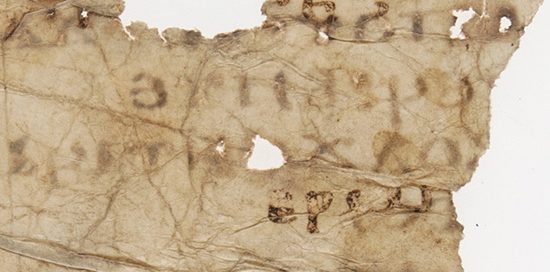
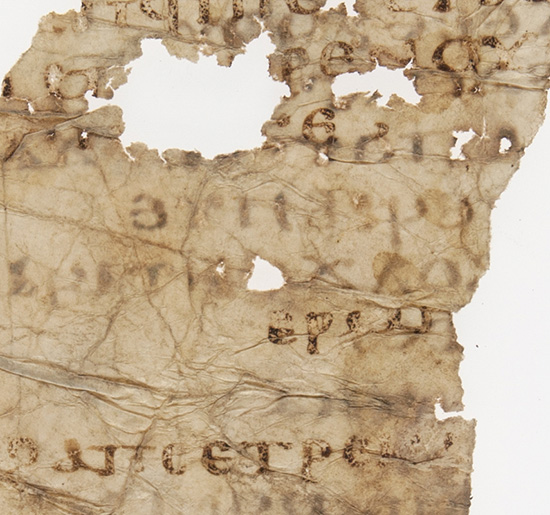
My last post on the discovery of an amulet with passages from the Bible on it brought to mind part of an essay I wrote and recently edited for the second edition of the book that I edited (with Michael Holmes), The Text of the New Testament in Contemporary Research: Essays on the Status Quaestionis.  The book contains essays on every major aspect of NT textual criticism by different authors, all of them internationally known experts in the field, with articles on papyri manuscripts, majuscule manuscripts, minuscule manuscripts, lectionaries, Greek Patristic citations, Latin Patristic citations, early versions such as Syriac, Coptic, Latin, methods for studying the manuscripts, and … lots of other things.  My essay is called “The Text as Window.”  It is about how the manuscript tradition of the NT can tell us about the social history of early Christianity – including the use of magic.   Here is the short section devoted to that question of magic (endnotes are at the bottom): *********************************************************** The incursion of the social sciences into the study of early [...]

Radio Debate with Pete Williams on Textual Variants

I'm in the midst of a thread on the textual variants of the New Testament, and whether they matter, and thought that it might be good to give an alternative perspective.  On January 3rd, 2009,  Peter J. Williams and I appeared as guests on the radio show "Unbelievable," a weekly program on UK Premier Christian Radio, moderated by Justin Brierley.   For this show we discussed my book "Misquoting Jesus" (In the UK the book, for some reason, is titled is "Whose Word Is It?").  Pete Williams is a British evangelical Christian scholar -- a very smart one, who knows a *lot* about the manuscripts of the NT -- who believes in the reliability of the New Testament and that thinks that my position is too pessimistic and extreme.  He did his PhD at Cambridge.  Peter is the author of Can We Trust the Gospels? and C S Lewis vs the New Atheists. Here's our back and forth. Please adjust gear icon for 720p High-Definition:

2025-09-10T12:24:31-04:00June 22nd, 2014|New Testament Manuscripts, Public Forum, Video Media|

Why Textual Variants Matter for the Rest of Us

In this thread I am discussing why it matters that there are so many variants in our surviving manuscripts of the New Testament.  It does not matter because there are any “fundamental Christian doctrines” at stake, per se, but for other reasons.  As I sketched in my previous post, it should matter for anyone who believes that God gave the very words of the Bible, since the facts that we don’t *have* the original words in some cases and that in many other cases the words themselves are in doubt, should call that belief into question.  (I should point out that with the Hebrew Bible we are in MUCH worse shape in knowing what anything like the “original”  -- whatever that might be – was.  The textual situation there is really quite dire.) The second group that the variants should interest would include just about anyone -- whether scholar, student, or general reader – who is interested in knowing what the various authors of the Bible had to say about this, that, or the other [...]

Fundamentalists and the Variants in our Manuscripts

In my previous post I began a discussion of why textual variants (that is, different wordings of the verses of the NT) found in the manuscripts might matter to someone other than a specialist who spends his or her life studying such things.    Most of the hundreds of thousands of variations are of very little importance for anything, as most people – even specialists – would admit.   Only a minority really matter.  And none of these seriously threatens any significant, traditional, Christian doctrine.   But I’ve argued that this should not be the criterion used to establish their importance.  Lots of things in life are important that have nothing to do with traditional Christian doctrines! I would say that the variations in the manuscripts of the New Testament should seem important to three groups of people.  If you’re not in one of these groups, then they probably are not all that important to you!   (1)  Fundamentalist and conservative evangelical Christians who believe that the Bible is an inerrant or infallible revelation from God, with no mistakes [...]

2025-09-10T12:25:30-04:00June 20th, 2014|New Testament Manuscripts, Public Forum|

Who Cares??? Do the Variants in the Manuscripts Matter for Anything?

Ever since I wrote Misquoting Jesus readers have asked – these are usually conservative Christians with a high view of Scripture, but not always – whether any of the differences in the manuscripts of the New Testament actually *matter* for anything. I have often pointed out that there are hundreds of thousands of differences among our surviving manuscripts.  We don’t know exactly how many because no one has been able to count them all.  Are there 200,000?  300,000?  400,000?   We don’t know.  But what we do know, as I’ve repeatedly said (as was first pointed out to me by no less an authority than my mentor, Bruce Metzger), there are more variant readings in the manuscripts of the New Testament than there are words in the New Testament. But do any of the variants actually *matter*?   This has become an issue with some of the readers of the blog over the past week or so as I have been devoting a thread to the question of whether it makes sense to talk about the “original” [...]

Hypothetical Problems with Copies of Philippians

In trying to figure out what it even means to talk about the “original” text of Philippians (was it what Paul meant to dictate?  Was it what he did dictate, if it was different from what he intended? Was it what the scribe wrote even if it was different from what Paul dictated?  Was it what Paul corrected after he saw what the scribe incorrectly wrote?  Was it the fresh copy that the scribe made even if it was different from the corrected version Paul gave him?  What happens if in fact Philippians is two letters that have been spliced together by a later editor, as many scholars believe, rather than just one letter – is the “original” the two different letters originally sent or the spliced together version that Paul did not create but someone else did?  Etc. etc.), in trying to figure all this out, several readers have suggested that the easiest way to look at it is that the “original” of Philippians is the letter Paul sent to Philippi, whatever happened, prior [...]

Dictation of Letters: More Complications for Knowing an “Original” Text

I have been talking about the problems in knowing what the “original” text of Philippians is.   Even with the following brief review, the comments I will be making in this post will, frankly, probably not make much sense if you do not refresh your memory from my previous two posts.   Here I will be picking up where I left off there. We have seen that knowing what the original of Philippians is complicated by the facts that: 1) The letter appears originally to have been two letters, so that it’s hard to know whether the original of each separate letter is to be the original or if the final edited version which Paul himself did not produce is the original; 2) Paul dictated his letters, and the scribe who wrote down his dictation would typically have made a fresh copy of the letter after Paul had made a few corrections – so which is the original: what the scribe originally wrote or the fresh copy he made after the corrections?   3) And if Paul made [...]

Complications with Finding an “Original” Text

I have been asked to comment on whether we can get back to the “original” text of Paul’s letter to the Philippians, and I have begun to discuss the problems not just of getting *back* to the original, but also of knowing even what the original *was*.   In my previous post I pointed out the problems posed by the fact that Philippians appears to be two letters later spliced together into one.  And so the first problem is this: is the “original” copy the spliced together copy that Paul himself did not create?  Or is the “original” the product that Paul himself produced – the two letters that are not transmitted to us in manuscript form any longer, to which, therefore, we have no access (except through the version edited by someone else)? But there are more problems.   Here I’ll detail them, in sequence as they occur to me. In what I am going to be saying now, I will simplify things by assuming that – contrary to what I’ve been arguing – Philippians is [...]

What Would Be the “Original” Text of Philippians?

I have begun to answer a series of questions asked by a reader about the textual history of Paul’s letter to the Philippians.  In my previous post I explained why some critical scholars maintain that the letter was originally two separate letters that have been spliced together.  That obviously makes the next question the reader asked a bit more complicated than one might otherwise imagine.  And it’s not the only complication.   Here is the reader’s next question: QUESTION:  Do you agree that the first copy of the letter written by Paul to the Philippians was also an original?  RESPONSE:  First off, my initial reaction that I gave a couple of posts ago still holds.  I’m not exactly sure what the reader is asking.  If he’s asking whether a copy of the original letter to Philippians is itself an original of Philippians, then the answer is no.  It is not the original.  It is a copy of the original.  Big difference.   But what if this copy was exactly like the original in every single respect – [...]

Do We Have the Original Text of Philippians?

QUESTIONS:  Would you agree that the letter written to the Philippians was an original writing of Paul? Do you agree that the first copy of the letter written by Paul to the Philippians was also an original? Assuming there were errors made by the person(s) who copied the original letter of Paul to the Philippians, would you agree that the first copy even with some errors still had the original context of the first letter.  If you do agree, then is it totally accurate to say that we don’t have the original letter of Paul written to the Philippians? Don’t you think that it’s more accurate to state that we do have the original but it has been altered to some degree?  Has the letter to the Philippians written by Paul been altered so much that we can’t really know what the original proclaimed? RESPONSE: These are great questions.  They have the benefit of making very concrete some of the things that I have said, in general terms, about the textual tradition of the New [...]

Snake-Handling and the Gospel of Mark

  Here is something to break up a bit my thread on the Gospel of Mark, studied from a literary-historical perspective (to be resumed in my next post).   This current post is related to Mark but it’s well, different. There was a recent CNN report that some of you may have seen.   I include it here, below, with the link to the site at the bottom.   This practice in some southern circles (especially in the Appalachians) of handling deadly snakes as part of a worship service is based on the saying of Jesus in Mark’s Gospel, after his resurrection, where he tells his disciples that those who come to believe in him will be able to speak in foreign tongues (as happens in Pentecostal churches, e.g.), that they will be able to handle deadly snakes, and if they drink any poison, it will not harm them. Offhand, I don’t know what in additional to snake-handling churches, we don’t have poison-drinking churches.  Maybe we do?  I’m sure someone on the blog can tell me.  In any [...]

Was Jesus Inserted Into Paul’s Letters?

QUESTION: I find the historical evidence for existence of Jesus pretty compelling as far as ancient history of antiquity goes.  Just to play devil’s advocate, how confident can we be that Paul’s letters have not been significantly doctored over a period of decades, inserting references to a historical Jesus when no such references exist in the originals? What are the oldest fragments and whole letters of the Pauline epistles?   RESPONSE: Interesting question.   I think I need to answer it more fully than just by giving a comment because some of my work (Misquoting Jesus) has been used by some people to claim that I don’t think we can know *anything* about an early form of the texts of the New Testament.  And that ain’t true.  My view is that we cannot know for *certain* about the original texts at any point, since we lack manuscript witnesses from near the time.  That is a very BIG problem for fundamentalists and hard-core evangelical Christians – a number of whom see me as the devil incarnate, even [...]

Papers at the SBL

As is typical, I spent most of my four days at the Society of Biblical Literature meeting seeing old friends in the field and former students who now have teaching careers of their own. I did make some time to go to a few papers on the final day (yesterday). Some were very stimulating, interesting, and learned, others were … not. Just to give you a sense of the sorts of things that get done in this setting, I’ll give (very) brief summaries of a couple of the papers I heard.. The sessions I went to were on New Testament Textual Criticism (this is the group that discusses the manuscripts that preserve the NT) and Social Memory and the Historical Jesus (roughly speaking, this group considers issues raised for establishing what Jesus really said and did based on advances in the study of “memory” by psychologists and historians today). The textual criticism section was long my “home” in the SBL; I was the chair of the section for six years and on the steering committee [...]

2025-09-10T12:23:26-04:00November 26th, 2013|New Testament Manuscripts|

Errant Texts and Historians

QUESTION: In your debates with James White and Dan Wallace, you argued that we cannot know what the original autographs of the NT said because we don't have the originals. In your debate with James White, you even commented that the 2nd or 3rd copier of the text of Mark could have radically altered the text so that the way it came down to us is radically different than the autographs. You've argued that this is the case even for classical writings or any textual document from antiquity. Now, if you believe we cannot know what the originals said because we don't have the autographs, then how could you know that Paul met with James and Cephas, and use that as an argument proving that we know Jesus existed? Is it not possible (according to your view) that Galatians has been radically altered? In other words, it seems that you either have to sacrifice your skepticism regarding textual criticism or sacrifice your certainty for the historicity of Jesus. RESPONSE: This is a great question! So, [...]

New Hermeneia Manuscript

Yesterday I provided background for my post of today by talking about the five hermeneia manuscripts of the Gospel of John that were discussed by Bruce Metzger in a publication in 1988. The reason that is now timely is that a new manuscript has just recently been identified with the same phenomenon. This time it is a Coptic manuscript that survives only in a fragment, of John chapter 3. The person who has identified it is Brice Jones, a PhD candidate in New Testament at Concordia University in Montreal. Brice is developing an expertise in textual criticism and the study of manuscripts, and this is a terrific discovery. Below is the notice that he sent around a few weeks ago reporting his find (in his own words, of course). FOR THE REST OF THIS POST, log in as a Member. Click here for membership options. If you don't belong yet, JOIN NOW!!! Yesterday I provided background for my post of today by talking about the five heremeneia manuscripts of the Gospel of John that were [...]

Fortune Telling with Manuscripts

An interesting new manuscript of the Gospel of John has just been identified. I’ll give some information on it in the next post, but to make sense of it I need to provide some background. This is pretty esoteric stuff (i.e., hardly anyone but hard-core experts knows about it), but it’s pretty interesting. In 1988 my mentor, Bruce Metzger, published an article called “Greek Manuscripts of John’s Gospel With ‘Hermeneia.’ ” In this article he identified five Greek manuscripts of the Gospel of John with an unusual feature. These papyrus manuscripts date from the third (or possibly fourth) to the seventh centuries. The unusual feature in them is that on the bottom of one or more pages (fourteen instances altogether among the five manuscripts) after the portion of the text of John’s Gospel , they have written the Greek word “hermeneia,” which is then followed by some kind of phrase or other. These phrases are such things as “If you believe it will be a joy to you” or “it is a good deliverance” or [...]

2025-09-10T12:23:14-04:00November 5th, 2013|New Testament Manuscripts, Reflections and Ruminations|

Video: Misquoting Jesus

I have decided to add a new feature to my blog.   There have been a number of video's recorded of my lectures and interviews, and I thought it might be interesting to post these on occasion here on the blog combined with my added comments. My most successful popular book so far has been Misquoting Jesus.   After it was out for a while and finally "took off," I got asked to give a bunch of lectures on the topic.  In fact, I still *do* give lectures on the topic.  Well, usually, it's the same lecture!   So I won't be posting every one of them -- one is enough.   This is one of the earlier ones I did, at Stanford University on April 25, 2007.   This was part of Stanford's Heyns Lecture Series.   The lecture was given at  Cubberley Auditorium, Stanford University Campus.   The lecture was called  "Misquoting Jesus: Scribes Who Altered Scripture and Readers Who May Never Know."   The original flyer announcing the event is here in PDF format. One of [...]

2025-09-10T12:23:13-04:00November 3rd, 2013|New Testament Manuscripts, Public Forum, Video Media|

Why Are There Contradictions in the New Testament?

QUESTION: If I had collected a lot of stories about a person and put them together into a “biography” I would at least make sure that all the stories were at least somewhat consistent. I don’t understand why the writers of the gospels didn’t make sure their final product made sense – they certainly didn’t seem to have any problems changing things to suit them in many cases. Did they just write down everything they heard without any regard to whether one story or dialog totally contradicted another in the same story? Did they not even care? RESPONSE: This is a great question, and I wish there were a simple (let alone great) answer to it. Let me make a few observations more or less off the cuff, without presuming to make anything like an authoritative pronouncement on the matter…. First, the question refers to internal discrepancies *within* a single author, not to discrepancies between authors. One of the most interesting features of the canonical Gospels’ accounts of Jesus is, of course, that they are [...]

Jesus’ Anger in Mark 1:41

So far in this thread I have argued that Mark 1:41 originally said that Jesus got angry when the leper asked him to heal him; and I have shown that elsewhere in Mark’s Gospel Jesus gets angry in context involving healing. And so: if Jesus got angry when the leper asked for healing in Mark 1:41 – what exactly was he angry about? Over the years numerous interpretations have been proposed, and some of these explanations are highly creative. Some interpreters have argued that Jesus became angry because he knew that the man would disobey orders, spreading the news of his healing and making it difficult for Jesus to enter into the towns of Galilee because of the crowds. The problem with this view is that it seems unlikely that Jesus would be angry about what the man would do later -- before he actually did it! Other have suggested that he was angry because the man was intruding on his preaching ministry, keeping him from his primary task. Unfortunately, nothing in the text says [...]

Jesus Getting Angry

As often happens in this blog, I started down one path and have found myself on another. I began this thread by talking about the story of the leper in Papyrus Egerton 2. That made me want to say something about the healing of a leper in Mark 1:40-44. But to make my point I had to talk about a textual problem in v. 41. And that has gotten me to talk about Jesus’ getting angry. He does appear to get angry before healing the leper (as found in some of our ancient manuscripts). But what is he angry about? To answer *that* question one needs to consider what Mark says otherwise about Jesus getting angry – something that never happens in Matthew or Luke. But Jesus does get angry on several occasions in Mark’s Gospel. What is most interesting is that each account involves Jesus’ ability to perform miraculous deeds of healing. In Mark 9 we find the account of a man pleading with Jesus to cast an evil demon from his son, since [...]

Go to Top